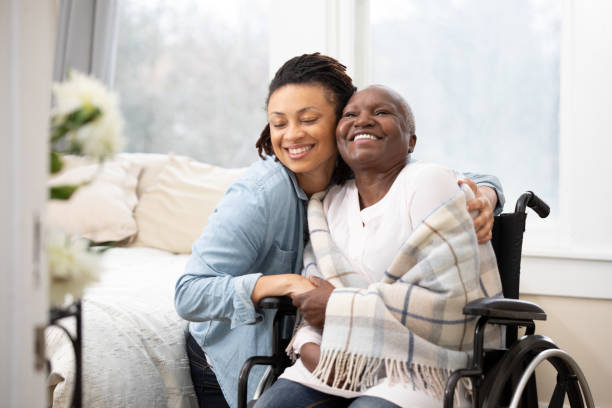

If I were to lose my independence as I age, I would lose my sense of self. Physically, I might struggle with daily activities such as bathing, cooking, or driving. This would force me to rely on others for tasks I may currently take for granted. Emotionally, I imagine feelings of frustration, sadness, and even embarrassment at not being able to care for myself. Socially, losing independence might limit how often I see friends or attend events. Financially, it could increase expenses for home health aides, assisted living, or home modifications. I would initially feel fear and resistance, along with anxiety about becoming a burden.
My ideal life as an older adult, would consist of me being healthy, active, and able to travel, volunteer and enjoy hobbies without needing constant support. Losing independence would change this vision drastically because I would no longer have this freedom. However, some parts of my imagined life could remain the same. For example, I could still keep my faith, maintain my family bonds, and engage in meaningful activities. The biggest shift would be going from self-reliance to accepting help and support from others.
The CARA model emphasizes resilience through Generalized Resistance Resources. For me, that would help in this situation include a supportive family and friends, access quality healthcare, financial planning, and my faith. Community resources could also play an important role. Resilience in this situation would look like adjusting my expectations, focusing on what I am able to do, and finding new ways to experience purpose and joy. It would mean learning to accept assistance without being ashamed and recognizing that help does not diminish me.
An article I came across called “Successful aging and its discontents: a systematic review of the social gerontology literature”, examines how aging is often defined by independence, health and productivity. It also highlights the pressure older adults may feel when they cannot meet those ideals. The authors argue that aging should not be determined by independence, but your ability to adapt, be resilient and your ability to find meaning. This helped me to see that even if my independence is lost, resilience and quality of life are possible.
Reference:
Martinson, M., & Berridge, C. (2015, February). Successful aging and its discontents: A systematic review of the Social Gerontology Literature. The Gerontologist. https://pmc.ncbi.nlm.nih.gov/articles/PMC4986586/
Hey Shaiquetta! I get where you’re coming from since i’ve always been very independent. I can’t imagine having someone to help me out with everyday things. I would feel ashamed, embarrassed, and so unhappy. I also agree with you on the fact that socially it would limit what events you can attend and how often you get to see your friends.
Shai,
Did you utilize an article for this post? There isn’t anything in references and you didn’t discuss the article at all. I will admit that I have been having difficulty with many of you talking about losing independence. I keep wondering the cause or reason for your loss of independence. Then I realize that you equate the simple process of aging as being consistent with loss of independence. At least I am assuming that’s what you are thinking.
Many people are quite independent – even as they age. It is not an automatic ything that you lose your independence. I had many older adults in my program at Lifespan who were in their 70s and 80s and 90s and they still lived in their own homes, drove themselves places, and were quite independent. There is usually some additional condition besides just getting older that creates the issue with independence and ADLs.
I would have liked to hear more specifics about the GRRs you think would help in this situation. I agree that resilience is the goal, but which of the GRRs are you working on in what you listed? And finally, as I mentioned earlier, I am clueless about the article you are referring to, where it was, or what it said.
Dr P
Hi Professor!
I am so sorry for not citing this piece. I try to read more to better understand the subjects in my class and sometimes that includes reading articles I find. The sentence should have said “An article I came across called “Successful aging and its discontents: a systematic review of the social gerontology literature”, examines how aging is often…” I had to go back through my iPad notes to find it. I am sure I was trying to catch up on schoolwork and made the mistake in a rush. I will be sure to double check and cite all articles from here on out.
But there is an article as stated above by M. Martinson and C. Berridge called “Successful aging and its discontents: a systematic review of the social gerontology literature”. You can access by going to the Oxford Academic site and logging in with your GSU credentials. It is an article that critiques the models used for aging. But the key words were successful aging and independence which is why it popped up. These authors discuss “successful aging”, and they make argument that some of the models being used work against what social workers or social gerontologist are working towards. I saw a portion in the reading that stated how aging should not be diminished to just being independent. I should have properly cited.
As for your statement about my concern. I hope this helps to better clear my thoughts up. When I consider aging, I think of my grandparents. I was raised by my grandmother and lived in close proximity, about 10 minutes, to my grandfather. So, I watched them grow older and I was able view what they were capable of doing versus what they used to be able to do. I saw how their children would have to argue with them about their capabilities, due to their unwillingness to accept help in some circumstances. And I think I dread that portion of aging. Being viewed as someone who is not capable of doing things they used to. I know that people live by themselves on a day-to-day basis well into older age. But I believe my view comes from family history of certain diseases and what I saw growing up. So, my mind automatically goes to loss of independence. I hope this help to clear things up!
As for GRRs that will assist in this situation, social resources is one of the listed but not named. That would include my family, friends and even faith could be in this category if we consider my church and the members. My individual resource which could include my faith. While access to healthcare and financial planning programs could be a part of material resources. Are you asking that I be more specific such as including the name of the church I attend, and naming resources that are available for finances and the forms of healthcare? I may be misunderstanding your question.
Shai,
Thank you for the clarification. I didn’t mean to suggest that your blog post was totally off the walls – just a little verklempt. Your additions are good. I think how we see our older adult family members is often cast in the realities of all the emotional elements of family, right? If families could talk about aging and the possibilities of death more openly, then older adult members wouldn’t have to deny their own aging. Plus, what you are describing is exactly what Cruikshank talks about right? We all have to be independent because that makes us feel like we are contributing members of society.
Dr P