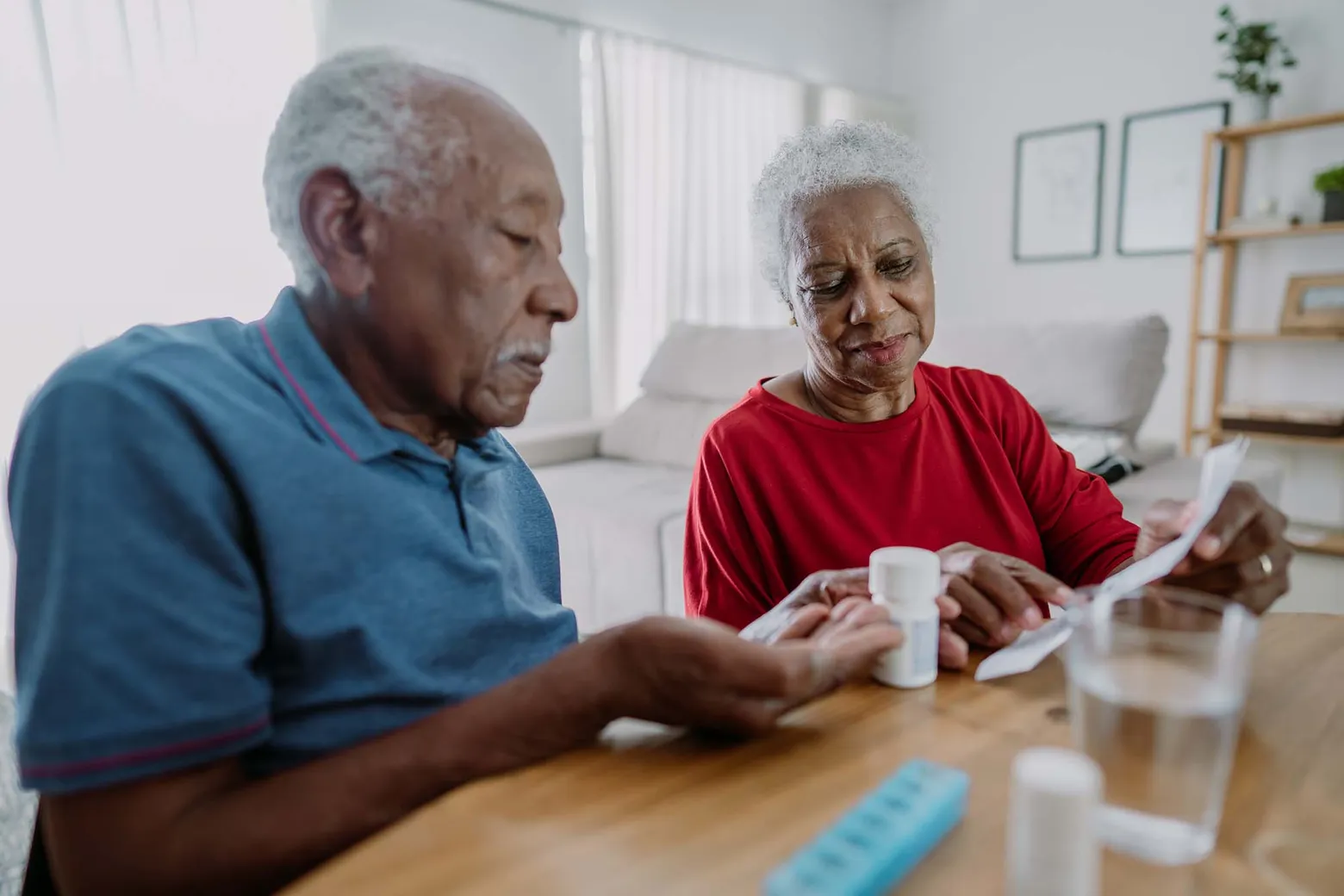

While reading the texts by Aronson (2019) and Cruikshank (2013), I was struck by several points. One aspect that particularly surprised me was Cruikshank’s discussion about the number of prescriptions given to older adults, even when the side effects can be harmful to their health. According to Cruikshank, “Each year, 100,000 Americans or more die of adverse drug reactions, one million are severely injured, and two million are harmed while they are hospitalized” (Cruikshank, 2013, p. 4). This makes me think about my grandpa because he takes so many medications. I’ve always wondered if all of them are truly necessary or if some could be contributing to his Dementia and Parkinson’s disease, or if those conditions would have developed inevitably.
As we age, our bodies undergo various changes. Our metabolism slows down, and our organs function differently. Changes in height and weight can also affect how our bodies react to medications. Cruikshank discusses how men and women metabolize some drugs differently. However, what concerns me is that doctors are more likely to prescribe tranquilizers and antidepressants to women than to men, which doubles their risk of falls and fractures (Cruikshank, 2013, p. 4). This issue is particularly alarming for older adults living in senior living facilities, where residents, primarily women, risk being overmedicated. The similarity in medication names often leads to mix-ups. Learning about this was shocking to me, though not surprising. Many women placed in these facilities end up becoming psychiatric patients due to being overmedicated with the wrong drugs. This situation worries me. What if it happens to me when I’m older? What if I end up in a facility where the nurses don’t double-check the medications they administer to their patients? It’s a troubling fear, and older adults should not be subjected to such treatment.
The conversations Aronson had with Irina, the head nurse, and Svetlana, Dimitri’s daughter, provided valuable insight into how medications can contribute to certain conditions in older adults. Through her discussion with Svetlana, Aronson learned more about Dimitri’s health, discovering that he had been perfectly fine six months before being admitted to the Advanced Dementia Unit. I appreciated how Aronson asked Svetlan more detailed questions, rather than sticking to the standard inquiries that most doctors make. This approach enabled her to gain a deeper understanding of Dimitri’s case and ultimately led her to identify the root of the problem. It was determined that Dimitri’s Dementia was drug-induced, and by discontinuing certain medications, his speech and movement were restored. Aronson pointed out that Dimitri was a victim of “prescribing cascade,” highlighting how quickly doctors can prescribe medications without fully considering the associated risks for their patients.
Aronson’s discussion on Dementia provided me with valuable medical insights into the disease, especially considering how it was barely mentioned during her time in medical school, which I find alarming. The book also sheds light on the overmedication of older adults and how this can contribute to conditions like Dementia. The memory loss tapes offered me a more realistic view of how Dementia affects individuals differently in their everyday lives, beyond my own experiences with my Grandpa and Great-Grandma. Both of these resources approached Dementia not just as a medical condition but humanized the individuals experiencing it. Aronson also highlighted how major health organizations, such as the CDC, often fail to list Dementia or Alzheimer’s disease as leading causes of death among older adults. This revelation shocked me, particularly because I have had two family members—one from each side of my family—who have been affected by Dementia. It is a common disease, and the fact that many of these deaths are not officially recognized is disturbing.
I found it intriguing to see how a healthcare professional chose an alternative approach instead of opting for surgery for her mother. Gabow would have typically recommended hip surgery for her other patients. However, when her own mother suffered from a broken hip, she came to understand that surgery isn’t always the best option for everyone. Many doctors tend to view their patients linearly, treating them all similarly, until something happens to someone close to them. It was refreshing to witness a doctor acknowledge this perspective, and I hope that others will follow suit by creating more personalized treatment plans rather than treating everyone the same.
References
The information you took from the sources were some of the main ones I also discussed in my post. Reading this and remembering all the medication my great grandmother took before she passed may me also think if she was over medicated or if medication, she took caused other problems she was having. I too was shocked at how doctors prescribe medicines to women that would actually cause more harm than help. With Gobow it goes to show you do not know which direction you would take unless put in the situation and when it came to her mother all medical recommendations for former patients went out the window and she choose to do what was best for her mother and what she wanted.
Alexandria,
I think you effectively reference specific points from both Aronson and Cruikshank, strengthening your arguments. The statistics you included are compelling and underscore the urgency of the issues you discuss. You demonstrated a thoughtful understanding of the implications of overmedication and the nuances in how medications affect different populations. Your concerns about gender disparities in prescriptions are particularly relevant and well-articulated. Overall, you offer thoughtful and engaging exploration of the issues surrounding aging and medication. Keep up the excellent work, and continue to draw on your personal experiences to enrich your post!
Alex,
Nice job on this post. You made good connections between the readings and your own understanding. Well done.
Dr P
Alex,
I decided I needed to add some things to this – so forgive me for two posts of feedback.
This is an excellent post. You even caught my mistake in calling Irina Dimitri’s daughter! Nice job. So many times, the explanation for problems with older adults turns into a bit of a detective novel, and Aronson does discuss examples of the kinds of questions to ask.
I think one of the most challenging realities for us as we age is that dementia is present among older adults, but it isn’t discussed, particularly among the general public. Most people don’t want to talk about aging at all, let alone talk about dementia. Professionals are trying to raise awareness of dementia. Still, frequently when they talk about it, they only succeed in making the general public even more afraid of their own aging. It’s a bit of a conundrum. A good friend, a geriatric nurse, made the case to a group of professionals who work with older adults. She told us that maybe we should stop talking about dementia all the time, because older adults are more than just dementia. I got her point, but you can see how difficult it is to reach that balance.
Cause of death is a much more political choice than we might think. I was thinking about this when I just heard that Diane Keaton died of pneumonia. Frequently, there are choices to be made about whether the cause of death is the most immediate illness or the long-term illness that contributed to the older adult’s decline. I suspect it’s far more essential to think about their most recent life when thinking about the cause of their death, but that frequently doesn’t happen.
Dr P