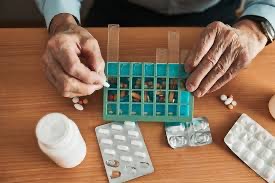

A few years ago, I watched a video of this gentleman stopping older adults on the street and asking them questions. One of those videos, a gentleman was 82 and said he was on no medications, and that shocked me, 82 and no medications?! How was that possible? Reading Chapter 4 in Cruikshank (2013) brought me back to that video. It made me think about how often older adults are handed prescriptions almost automatically and how rare it seems to not be on medications as you age. A tidbit that surprised me the most was that some of these medications aren’t even treating illnesses but treating what might just be normal parts of aging. That really hit me, because until this past year, I’ve always assumed if someone is prescribed a drug, it’s necessary or supposed to help alleviate a symptom that is hindering quality of life, and also upsetting since I feel like some older adults have difficulty advocating for themselves and have a lot of trust in their care team simply because they believe in their doctors education.
Another thing that stood out to me was her explanation of how our bodies change with age, especially in females, and how a slower metabolism, kidneys, and liver work differently, resulting in shifts in body fat and muscle. Differences in body functioning and significant changes in body composition are understandable reasons why older adults are more sensitive to medications. Another fact that surprised me was the number of adverse drug reactions in older adults, but then, when I step back and look at the number of medications that the older adults in my life take, it makes sense from that standpoint. When you have so many drugs, based on my experience, you are bound to have interactions. However, not severe drug interactions, even in a few medications, can wreak havoc on your physical and mental self. Plus, this makes me think of another aspect: when an older adult has a medical issue, how often are those symptoms medicated versus looking at their current medications to see if it is being derived from their prescriptions?
Lastly, I really appreciated that Cruikshank (2013) suggested non-drug approaches, such as herbalists, careful monitoring, and even questioning whether medications are needed in the first place. While she brought up the point that antipsychotic meds are given to dementia patients, which is my fear, having that hope of an alternative to healthy aging doesn’t automatically mean a cabinet full of prescriptions.
Aronson (2019) took a different route, but her stories drew me in. Her conversation with Dimitri’s daughter, Svetlana, stuck with me because I could feel Svetlana’s frustration due to the situation. She knew her father, she had insights, and yet the doctors didn’t really put together that specific symptoms, like a lack of speech, could be drug-induced. It made me think about how powerless families can feel when the physician holds all the authority. I kept asking myself: how often does this happen? And what would it feel like to be in Dimitri’s or his family’s shoes, knowing that your or your loved one’s needs are not being thoroughly investigated, but simply brushed under the rug?
The section on dementia really connected with me, especially since I had the Memory Loss Tapes in the back of my mind. Those clips from the documentary showed so much humanity, people with memory loss still enjoying moments, routines, and relationships. In contrast, Aronson (2019) described dementia at a medical conference as a clinical problem to solve. While I recognize and appreciate the value that biological underpinnings bring to the world of dementia, this disease is not solely that. That disconnect was frustrating to read, but it also reminded me of how important it is to keep the person at the center, not just the diagnosis, because while they may have days where they may be unrecognizable to you, they are still there and them. However, I did value her view at the conference. Utilizing different skills, such as understanding the person living with dementia, is just as important as the clinical diagnosis.
In addition, there was the story of Gabow’s mother. That example gave me chills in the best way, because it showed how powerful small, thoughtful changes can be and how important it is to preplan. No major medical interventions, but just adjustments to her environment and daily life that made her feel safe and cared for, just like her mother had wanted. It reminded me of Cruikshank’s call for alternatives and made me think about my family. I kept picturing how I’d like my loved ones or myself cared for one day. My most significant impact was realizing that the most meaningful care often doesn’t come in a pill bottle but comes from listening, adapting, and treating people with dignity.
Aronson, L. (2019). Elderhood: Redefining aging, transforming medicine, reimagining life. Bloomsbury Publishing USA.
Cruikshank, M. (2013). Learning to be Old: Gender, Culture, and Aging. Rowman & Littlefield Publishers.
Good evening Mary,
I can relate to your mention about assuming that everyone who is using a medication needs it for whatever purpose said drug is intended for. I often try not to ask many questions about it either which leads me to just believe my own assumption. But, after reading the texts and so on, I have realized that it must be quite difficult for many elder adults to advocate for themselves properly and often end up with drugs they may not need.
Hi Mary,
I pointed out similar things in my post, and I also think it’s so insane how many people don’t realize that medications are metabolized differently as we age. It makes me wonder how many older adults are currently dealing with side effects and don’t even know it, especially when some of these prescriptions might not even be necessary. Did you know that after I read these two articles, I talked with my pharmacist, and she told me about a patient who was showing dementia-like symptoms but it turned out she just had a UTI, and once that was treated, she went back to normal? It really makes me think about how even common illnesses can present differently as we age, and how often those symptoms might be mismanaged or quickly medicated instead of fully investigated. I really enjoyed reading your post and it gave me a lot to think about!
Wow! Thank you for sharing this experience from your pharmacist. What an extreme presentation of symptoms for something that is treated relatively simply.
Mary,
I think there is a real paradox when we talk about our relationship to medication as older adults. On the one hand there have been many advances in medicine that have improved the quality of life we experience as we age. Many of the medicines that can cause problems can also help with the general realities of aging. However, you are right, the issue is how many and whether they are all needed.
I have always been of the opinion that one of the most important Doctors we need as we age is our primary care physician – the one that looks at the whole patient – and they should be a gerontologist.
I loved your last paragraph and I think that really summarizes the point, doesn’t it?
Dr P