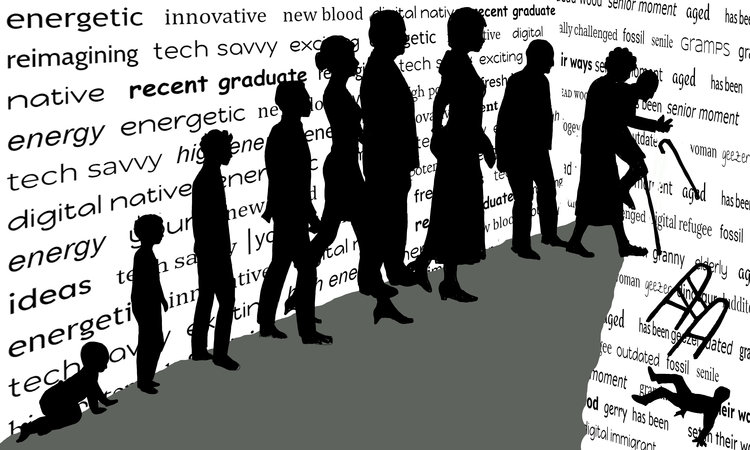

After reading Cruikshank’s examples of ageism, I realized that the Fairy Tale example shocked me the most. After reading about how older women are normally painted in those stories, I thought back to all of the fairy tales or Disney movies I watched as a child. There is almost always an older woman being depicted as evil and cruel, and they always display jealously towards the young, beautiful princess in the storyline. This wasn’t a shock because of how they were being described, it is a shock that I never realized how normalized it is to depict older women as bitter, jealous and angry. It is almost as if older people are not considered human. Although they are displaying what it means to be exactly that, aging being a part of the human experience. And in realizing that I grew up taking this view of them in subconsciously I may have my own bias that need to be worked through. This example shows how deeply rooted the stereotypes of aging women is in society. In practice, you need to be aware of your own subconscious bias because there has always been a negative view of older women. You have to actively pay attention to those around who may treat an older women’s feelings or pain as less urgent or a symptom rather than their reaction to their experience.
Cruikshank’s discussion on the witch-crone figure, supposedly depicting older women, labels them as dangerous because of their knowledge and independence. This can be compared to Dovey’s “Eccentric Old Woman”. Dovey’s description of course was more quirky, odd and harmless. However, they both combine ageism and sexism. They describe how society sees older women after youth and “faded beauty”, and how their characteristics make people uncomfortable. We go on to then read about internalized ageism. Cruikshank describes it as older adults subconsciously taking in society’s negative views about aging. For example, older women apologizing for moving so slow or being in the way. This displays shame or embarrassment. In Dovey’s reading, she discusses how she herself fears aging due to society’s negative views of aging. She talks about how her characters are based on her beliefs of growing older. Aronson on the other hand talks about older adults who reject the label “old” due to negative views. All in turn point to the negativity surrounding aging and how it can be internalized differently.
Each reading then goes on to discuss how language plays a part in continued ageism. Cruikshank uses “young lady” and “young at heart” as examples. While Dovey uses exaggerated descriptions such as “eccentric old woman”. These both reduce what aging overall. They seem harmless but when you hear an older woman being told she’s still “young at heart”, it can still be viewed as insult or disrespectful. I have not experienced this directly. But I have witnessed others who have. It as if they are saying aging is bad, rather than embracing it.
When Aronson describes the uneasy reactions, she gets for being a geriatrician, it shows how even caring for older adults receives negativity. I took this course in order to better understand the older population since I would like to work with oncology patients. What challenges me most is how subtle ageism can be, especially in helping fields. We have read throughout this course and heard about the experiences of the older population. We have seen how their desires are not always taken into consideration because they are considered incapable of making decisions for themselves. To avoid carrying these biases into practice, I will carry the knowledge that older adults are still human. I will keep in mind the language I use when speaking with them, listen closely to their wants and stories, and see older adults as whole individuals and not as shells of their former selves. They are not just their age or illness.
I really like your reflection on the fairy tale examples. It’s interesting how normalized it is to depict older women as bitter or jealous, and I hadn’t consciously noticed how much that can shape our biases growing up. I also liked how you connected Cruikshank, Dovey, and Aronson to show the different ways ageism is internalized and reinforced through stories, language, and societal attitudes. Great Blog!!!
Shai,
I share your experience with fairy tales and the subconscious adoption of ageism that we have all learned from the time we were very young. The biggest issue about this for me is to realize how internalized this has become and how we simply assume this is true and continue on with the stereotype.
Your examples and connections between Cruikshank and Covey make a great deal of sense. I would agree with those connections as well. but then you move on to internalized ageism and I would have liked for you to talk about how that is significantly different than ageism itself. yes it utilizes the same stereotypes, but the issue is that the individual incorporates those stereotypes into heir own definition of self. The oppressed incorporate the beliefs of the oppressor – without even realizing they are doing so.
And all of this – all of the various forms of ageism – external and internalized – are only able to be perpetuated because of language – and that takes us right back to your very first paragraph. We have incorporated the language that affirms ageism and then when we believe it about ourselves as we age – that becomes internalized and cements our behavior.
You are right the way to change ageism as a practitioner is to do what we social workers always say we believe – we respect the worth and dignity of every human being – regardless of age, race, sexual orientation or cultural diversity.
Dr P