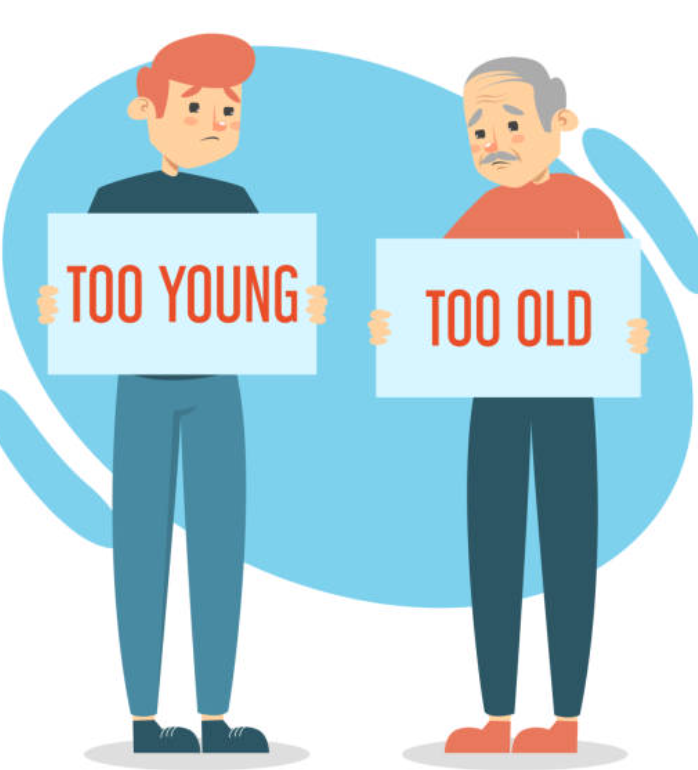

My greatest impact came from the reading Cruikshank’s agism chapter. This reading helped me grasp the way others viewed agism. Being discriminated against based on age showed how ageism is compared to sexism and racism based on individuals’ appearance. I never realized how using sayings like, “playing with my grandchildren makes me younger”, was a negative stereotype for aging. I still want to wrap my head around why so many products are being used to attempt to stop or slow down aging. I can understand wanting to live longer, but I do not want to be “young” forever and appearing to be young to fit into societal idea of healthy or accomplished is not for me either.
There were a few examples mentioned in Cruikshank’s Ageism that could have been compared to Davey’s article but the one the stuck out to me the most is Imogen Cunningham’s collection, After 90, example. In this example, Cunningham is being seen as looking younger or youthful and having high energy and “working after 90” as if since she was older, she should be seen as tires, worn-out, and barely moving. Showing how others view her and how she sees herself was different. In Davey’s article he mentions examples like moving the goalpost, as we get older the age for getting older or being old changes and feeling younger as we get older.
Internalized agism and when an older adult takes the negative stereotypes given by society and uses it as a defining factor in their lives. Or feeling they cannot complete certain things because of their age. In Aronson’s Adult chapter an example of internalized agism would be when Ursula K. Le Guin statement is mentioned, “If I am ninety and I believe I’m forty-five; I’m headed for a very bad time trying to get out of the bathtub. (Aronson, pp. 140) This is an example of internalized ageism because getting older there is this stereotype that all older individuals will need help everyday life actives and Ursula K. Le Guin accepts that negative stereotypes and responds by saying she will have trouble getting out the bathtub. In Davey’s article, internalized ageism is seen when Philip Roth states that he retired because of his age and was tired of reading, writing and talking about his writing. When he was still writing and capable of writing he was just at a point in his life where he felt he was too old to be doing those things.
Language plays a huge role in stereotypes in all readings. In Ageism, I see that phrase like, “young lady and young at heart,” dictate individuals not wanted to feel old or individual downplaying the life they have witness and survived because they may look younger. In “What Old Age Is Really Like”, you see where actress, Juliet Stevenson, discussed how her writing was about how she thought she would be as an older adult or how she perceived herself in the future. When reading Adult, language was more about how others see ageism. Like calling an older adult cute could be considered, “infantilizing and insulting” (Aronson, pp. 139). Or how saying that age or aging does not exist is like saying an older adult is not relevant. This takes away from their life accomplishments, experiences and worth.
I have experienced ageism from younger generations and even older generations. I have been called a baby by older individuals or when I am with my mother and people who cannot believe she is my mom I cannot figure out if they are saying I look older, or she looks younger either way I can see the offense or her face. When I speak with older adults daily, I can feel the frustration across the phone when they have repeat stuff to remember where they were going with conversation or sometimes, they have to say to bear with them or be patient because they may have issues hearing or grasping what is being said as fast as it is being stated.
I took this class to get a better understanding of older individuals and the process of ageing. Aging will take place in everyone’s life but when they experience aging, how they experience aging, and the age of feeling like one is aging will be different for everyone. I feel the most difficult part of working with individuals going through aging is helping someone that is big or in appearance to understand that looking, feeling, and accepting aging does not less than of a human. Helping to understand it is okay to feel older than the next person and younger than another. I would try to find activities and things individuals can relate to. Try to dive deep into why appearance is important, find help in understanding what is needed to feel more comfortable in the next steps to come. It is okay to focus on how one looks without trying to get rid of or stop the aging process.
References
Aronson, L. (2021). Elderhood: Redefining aging, transforming medicine, reimagining life. Bloomsbury Publishing.
Cruikshank, M. (2013). Learning to be old: Gender, culture, and aging. Rowman & Littlefield, Publishers.
Dovey, C. (2015, October 1). What old age is really like. The New Yorker. https://www.newyorker.com/culture/cultural-comment/what-old-age-is-really-like
I enjoyed your blog post. I really liked what you said about Cruikshank’s chapter and how it opened your eyes to ageism. I never really thought about how saying things like “playing with my grandkids makes me younger” could actually be a negative stereotype. Your example of Imogen Cunningham was really interesting too—it’s interesting how surprised people are when older adults are still active and creative. Your post made me think more about how society pushes the idea that being young is better, even when aging is just a regular part of life.
Hi Teaira, I really liked how you connected Cruikshank’s discussion of ageism to sexism and racism because it shows how deeply these stereotypes affect people. I also never thought about how phrases like “playing with my grandchildren makes me younger” can reinforce negative ideas about aging. Your examples from Aronson and Dovey clearly showed how internalized ageism can shape the way older adults see themselves. I agree with you that aging should be embraced as a natural and meaningful part of life rather than something people try to resist.
Tierra,
I wanted to share a couple of observations about your analysis of the readings.
First, I don’t understand how “playing with my grandchildren makes me feel younger” is considered ageist. Maybe that was referenced in one of the readings and I missed it, but I don’t remember reading that anywhere. Playing with children always makes me feel younger – they are children, after all.
Second, it’s Dovey, not Davey. And I have looked through this article and I don’t seen anything remotely related to Imogen Cunnihgnam’s collection? Not at all sure what that is about.
Third, when you talk about internalized ageism, I kept feeling like you had it backwards. LeGuin does talk about if I’m 90 and I believe I’m 45, I will have a hard time getting out of the bathtub. But that doesn’t mean she assumes everyone who is older has a hard time getting out of the bathtub – right? The issue is that the best response to aging is to accommodate aging. If you try to get out of the bathtub the same way you would when you were 45, then you will have a problem. However, if you get out of the bathtub the way a 90 year old needs to do it, you could be just fine. It’s not the LeGuin is saying you will always have trouble getting out of the bathtub. It’s that she is acknowledging that you will need to do it differently when you are 90 than when you were 45.
Your discussion of internalized aging just confused me. I don’t know what young lady young at heart is referring to? That entire paragraph and the one following use a lot of words, but I do not truly understand the point you were trying to make. I am sure it was in there, but it didn’t come across in a way that I could understand your position, how it related to what you read or why you took this class.
Dr P