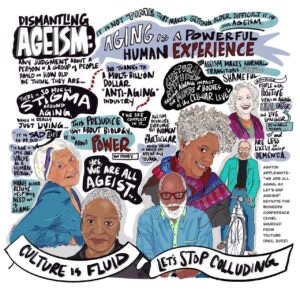

The readings from Aronson, Cruikshank, and Dovey pushed me to consider how society treats older adults and how we talk, think, and even feel about aging, often in ways we don’t recognize as ageist. One example from Aronson that deeply impacted me was how physicians treat geriatric medicine. Aronson describes how other doctors only call the geriatrician when they encounter an older patient they don’t know what to do with, as if caring for older adults is confusing or lesser rather than a skilled specialty. Geriatricians aren’t celebrated like cardiologists or neurosurgeons; instead, their work prioritizes function, safety, cognition, and daily living, which is viewed as less prestigious or unneeded. This example significantly impacted me because it revealed a systemic bias within healthcare itself. If the medical field devalues the professionals specializing in aging, what does that say about how we value older adults? Aronson’s stories challenged my assumptions about what geriatric practice entails. They reinforced that aging care is not about curing age or reversing time but about promoting function, dignity, and autonomy. Geriatrics demands an interdisciplinary mindset and a comfort with complexity that many specialties never approach. Aging care is real medicine, and older adults deserve practitioners who recognize and honor that.
Cruikshank devotes significant attention to unpacking stereotypes about aging, from frailty and dependency to exaggerated wise elder tropes. One of her examples comes from classic literature, where older characters are portrayed as burdens and impotent, and how, even in aging, women are less than men and perceived as things to be avoided and feared, versus embraced. Thus, reinforces aging as a narrative of decline and irrelevance. I saw this theme echoed in Dovey’s discussion. Dovey admits she initially wrote two caricatures: the “crabby, computer-illiterate” older man and the “quirky, ageless-in-spirit woman in a magenta turban,” only to be asked, “But what else are they, other than old?”. That moment of self-reflection highlights how easily we reproduce stereotypes, even if we have positive intentions. It reminded me of Cruikshank’s point that older adults are often reduced to their age identity when they have diverse personalities, histories, and desires.
Internalized ageism is another theme woven throughout both texts. Cruikshank explains how stereotypes don’t just come from outside, but older adults can absorb ageist beliefs and apply them to themselves. Aronson offers a powerful example: she describes feeling defensive when someone told her she loves older adults, as though appreciating older people was odd or shameful. Dovey shares a similar moment when a medical student said she loved older people because they tell incredible stories, only to be reminded by another doctor that older adults are simply regular people who happen to be old. Both examples reveal that even positive stereotypes flatten individuality and create distance. Internalized ageism is not only something older adults experience, but it also appears when younger people believe they are helping but are actually reinforcing separation and difference.
Language plays a decisive role in perpetuating ageism. Aronson talks about the popular phrase successful aging; raising the thought that if some people are aging successfully, others must be failing. What does it mean to fail at aging? What about genetics, illness, disability, or lived experience? This language ties worth to productivity, physical capability, or youthful traits, reinforcing harmful expectations. Aronson also highlights openly derogatory terms such as “biddy,” “sea hag,” and “geezer.” I’ve heard these used jokingly, and what surprises me is that I often listen to them from older adults, directed toward peers or family members. This shows how deeply ageist language becomes internalized. When a group adopts the oppressor’s language, the harm cuts deeper than humor.
Cruikshank notes how language can freeze people into stereotypes, such as using much younger photographs in obituaries, symbolically preserving youth even as a person is honored for a long life. Dovey adds another layer, noting how the media portrays older adults as either “Old People Behaving Hilariously” or “Old People Behaving Terrifyingly”. These exaggerated portrayals erase the diverse, everyday realities of aging. Reflecting on my own experiences, I realize I have heard and sometimes used phrases like “senior moment” or “you don’t look your age” without thinking twice. Now, “you don’t look your age” does not feel like a compliment, but a reinforcement that youth is valued, and aging is something to escape.
Finally, Aronson discusses the reactions she gets when she tells people she is a geriatrician, often seeing surprise, confusion, pity, or admiration. I frequently get similar reactions when I share my interest in aging practice. People imagine decline, institutions, and sadness, but not resilience, identity, meaning, or the privilege of accompanying someone through later life. One of the most challenging parts of pursuing work in aging will be confronting these biases, particularly language, in colleagues, families, and myself.
To overcome these challenges, the first step is education, not just academic knowledge, but shared language, awareness, and exposure to older adults’ lived stories. I want to model respect and curiosity rather than pity or protective reflexes. I want others to see aging not as an ending, but as a complex, dynamic, and meaningful stage of life. Suppose we’re going to change how society views older adults. In that case, we must also change how we talk about aging, who we imagine older adults are, and what possibilities exist in later life. These readings reminded me that being an older adult is not a problem to solve but a relationship, a practice, and a human experience that deserves dignity, depth, and celebration.
I enjoyed reading your post! I think you nailed the systemic issues around geriatric care how society undervalues it says a lot about how we value older adults themselves. One thing that stood out to me is how internalized ageism isn’t just a problem for older adults it’s something all of us carry, often unconsciously and it shows up in the way we joke, compliment, or even try to help. I’ve noticed this in myself too, catching myself using phrases like “you don’t look your age” or assuming someone might not be tech savvy just because they’re older. Your focus on modeling respect and curiosity really connected with me, and I’d add that storytelling sharing older adults’ experiences and capabilities can be a powerful way to challenge stereotypes, not just in ourselves but in society at large.
Hi Mary, great job on this post. I agree with what you said about confronting the bias that comes with working with the aging group. As you stated, it all starts with us. We’ve been so accustomed to using certain languages about older adult to the point where it’s not noticeable. I’m happy that courses like this is bringing more awareness to the biases that goes on in geriatric medicine and the aging population as a whole.
Mary,
Very nice job with this post! You have analyzed the readings, made connections and addressed the questions. And in addition you shared your own experiences as a way to understand what the authors were saying. Well Done. I loved your last sentence.
These readings reminded me that being an older adult is not a problem to solve but a relationship, a practice, and a human experience that deserves dignity, depth, and celebration.
I love the idea that being an older adult is a relationship, practice and human experience. Well said.
Dr P