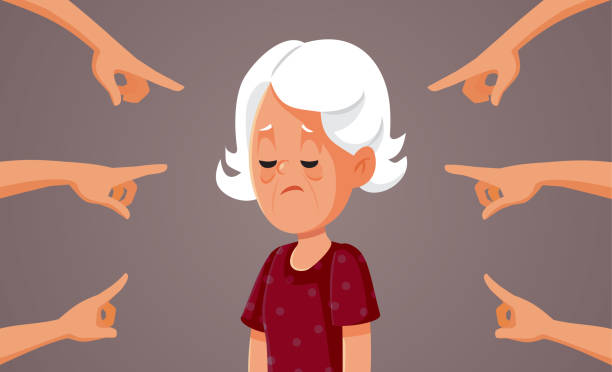

Ageism and Beauty Standards
Cruikshank’s (2013) examination of plastic surgery stood out to me because I think the industry is probably booming now—and among even younger demographics. Recently, I had one of my wisdom teeth removed. During my consultation at the oral surgeon’s office, I noticed the staff consisted exclusively of young, attractive women. While I’m used to most of staff to be women at a doctor or dentist’s office, I thought these women were especially young and conventionally attractive. After the surgery, I went back for a follow up exam, and I noticed many young women in the waiting room as well. Then two women in their twenties came in and announced that they were there for Botox. After some internet searching, I learned that many oral surgeons offer Botox and other cosmetic treatments. It is commonplace to hear about middle-aged celebrities getting cosmetic surgery, but I think it has become acceptable and normal for young women to get various procedures that change their lashes, lips, and face shape. Cruikshank says, “No mockery is directed at their delusion; it is too widely shared to be named make-believe” (2013) in reference to the widespread acceptance of cosmetic surgery, and I think the quote is even more true in 2025.
Cruikshank (2013) goes on to remark on authors such as Betty Friedan using decades old portraits on their books. This may seem like a stretch, but it reminds me of people on social media when they show a Mother’s Day or Father’s Day photo, it is often a photo of their parent when they were much younger. I’ve always thought this was strange. As if we need proof that your mom used to be youthful (or more attractive) than they are now. To be fair, social media users’ motivations are probably at least partially tied to the novelty of seeing their parent look different, but I believe that ageism and beauty standards also have a role here. While this conversation on beauty may seem frivolous in comparison to healthcare and social care, we must remember that women’s value is often tied to their beauty based on Western standards.
Ageism and Literature
Cruikshank (2013) spoke of Gulliver’s Travels, in which the author Jonathan Swift described a breed of older people as incapable of pleasure or friendship, gloomy, chatty, and a horrible sight, especially the women. In “What Old Age is Really Like,” the author Dovey (2015) is embarrassed to admit that the older characters in her novel are essentially stereotypes, a grumpy old man and a kooky old lady. Dovey shares a critic’s term for a genre that centers older people: “Old People Behaving Hilariously” (2015, p. 6). Cruikshank and Dovey both make note that literature often focuses on old age as a loss of physical ability and attraction. As a reader and bookstore manager, these readings encouraged me to think even deeper about representation of older adults in literature. Some of my favorite novels center older characters, and while I read them, I wonder if these books are based on stereotypes or if they are thoughtful representations that show the good and the bad parts of aging. Dovey’s New Yorker piece left me wondering if these stereotypical narratives are more common among men or women authors, and if the characters themselves were more often men or women. Furthermore, most of the authors she mentioned were white and European—do other cultures have the same aging stereotypes in literature?
Internalized Ageism
Switching to nonfiction, in Aronson’s memoir, she details her internal struggle with wanting to “look her age” but not wanting to give in to societal beauty standards (2019, p.176); showing us that even a geriatrician is subject to internalized ageism. Aronson defends her commitment to covering her gray hair, as wanted to look her age, as if looking an older age is a negative quality. I’m not sure she is clamoring for accuracy so much as trying to distance herself from looking “old.” While she started dying her hair in her thirties, when gray hair is considered premature, she has continued to do so into her fifties, a time when it is normal to have gray hair. Dovey quotes Simone de Beauvior, “Old age is particularly difficult to assume because we have always regarded it as something alien, a foreign species” (2015, p. 3). I think this quote perfectly encapsulates this conversation on internalized ageism, whether we’re talking about Aronson’s hair or the cosmetic surgery industry.
Language and Ageism
Language shapes and reinforces ageism, as each author demonstrated. Cruikshank (2013) described elderspeak and patronizing speech and described how it is detrimental to older adults’ self-esteem and results in poorer engagement and lower quality conversations in medical settings. I do not work in the aging services network yet, but I have some experience of patronizing speech at my part time job. For instance, I witnessed a teenager saying, “I hate that I have to dumb myself down when I talk to old people,” while they were speaking to another teenager. I have also noticed that some people in customer service use completely different voices for older adults than people their own age, not only are they more polite, but they are full of enthusiasm and loud, as if they are talking to a child or a pet.
Dovey shares the phrase “aged by culture,” and notes how they way we talk about aging as either a failure or success—stories to be mourned or celebrated—limits our ability to write narratives of diverse aging experiences (2015, p. 2). This resonated with me and underlined the role that language and storytelling play in ageism and positive and negative stereotypes. In my experience as a gerontology student, when the conversation of ageism comes up, it can often lead to a conversation where people say older adults are our elder role models with great stories and wisdom to spare. I don’t think that is always the case; we should not stereotype all older people as grumpy, and on the flipside, we should not paint all older people as wise elders. As Dovey points out, old age is a “significant part of our life,” and I don’t think it’s accurate or fair to reduce it down to a “good” or “bad” thing (2015, p. 2).
The Problem of Ageism
As I have mentioned, I am not a social work student; I am a gerontology student interested in working in a capacity where I can help older adults get connected with resources, whether in a position at the Atlanta Regional Commission or in a senior center. Aronson says the medicalization of old age introduced additional “ways to see old people as ‘problems’” (2019, p. 188). I will work to avoid the mentality that positions aging people as a problem. I also want to remember that an aging society is not in itself a problem, but rather a different landscape requiring different strategies for navigation. An author in conversation with Dovey says, “I never, never thought I was tackling the ‘problem’ of old age… It was just another aspect of being alive, and human” (2015, p. 9). While their conversation was in reference to writing about age in fiction, this quote stood out because it can help us overcome ageism and stereotypes in society that disable older adults and distorts how we view them. I want to keep my mind open to diverse narratives.
References
Aronson, L. (2019). Elderhood: Redefining aging, transforming medicine, reimagining life (1st ed.). Bloomsbury US Trade.
Dovey, C. (2015, October 1). What old age is really like. The New Yorker. https://www.newyorker.com/culture/cultural-comment/what-old-age-is-really-like
Hello Tina!
Great post. It’s fantastic that you are a gerontology student. What was something that made you want to work in that specific area? I think it’s also great that you are taking this class since I think it’s something that can be very beneficial in the future.
Hi Lizbeth,
Thanks for the comment! My undergraduate degree was in Sociology. I was interested to learn how society and institutions affect low-income and marginalized individuals and families. The summer before my final year, I met with my Families & Society instructor, Dr. Jenny Zhan, and asked how I could learn more about families because there weren’t many courses offered in the Sociology department. Dr. Zhan told me about Gerontology. At that point I had been introduced to aging as a global demographic “issue”, and some of my friends who went to school years before me (I was 36) had told me about sociology classes about older adults, so I knew it was an area of study that existed, but I didn’t know much more.
I made a decision to drop my Spanish minor because I was struggling and investing a lot of time, and I came to the realization that I didn’t have the outgoing personality needed to immerse myself. I decided to use my last year to learn more about Gerontology. I realized that older adults are often an element of families that are forgotten or overlooked. To be honest, for years when I was thinking about working on behalf of families, I was always envisioning poor single moms and their kids–because that was my experience as a kid. But my grandmothers were a huge part of my life. And their experiences and presence impacted my family in major ways. As I took those undergrad courses, I started comparing the lives of my partner’s older parents and my grandmothers, and I wanted to learn more about social determinants of health. So, now I’m getting my masters in gerontology! If you’re an MSW, I think you can take additional classes to get a leadership in aging certificate. Sorry for such a long answer.
Tina,
Your commentary on Botox reminded me of the conversations happening lately about gender affirming care. The lifts, tucks, and augmentations can really be a double-edged sword. Some people are so against trans and nonbinary people fully embodying themselves, but those same people likely undergo plastic surgery to feel more youthful. I know Botox can also be used to help with migraines and TMJ. If used well, plastic surgery has the potential to do a lot of good, but I believe it will remain at the forefront of perpetuating unrealistic beauty standards.
You are likely onto something when considering the cultural origin of writers and how they depict their elders. My instinct suggests that older adults may not be seen as second-class in all cultures, but it also begs the question of whether they become oppressors of younger generations. This yearning for hierarchy may still exist.
Tina,
You have done a great job with this post, analyzing the readings, making connections and answering the questions posed. Well done. And you asked some additional questions I found interesting.
First, Dovey actually was born in South Africa and is Australian. But you raise a really good questions. Are the issues regarding the treatment of aging in literature a white priveledge or european problem. I took a brief look, and my very small sample would suggest that indigenous writers – or LGBTQ+ writers probably avoid the flattening of older characters more than most, but they probably pay more attention to the nuance of their characters because they have to make those things clear to readers who don’t know as much about them. But you got me thinking and I found an article by Dovey about her own work to write from a voice that isn’t just white priveledge. I thought you might enjoy reading what she had to say:
https://www.theguardian.com/books/2018/feb/26/ceridwen-dovey-when-you-take-up-your-pen-youre-taking-up-a-position-of-power
I too love the Beauvoir quote and I refer to it a lot. If you look at some of our other readings, particularly the patient stories that Aronson told, you find many examples of that reality.
I agree that older adults are not only good or bad, but a complex combination of what all of us deal with. That’s the same truth as writers all writing from priveledge or writing from a broader experience, right?
And finally the quote – “just being alive and human” is really the whole darn point of this class, isn’t it? I remind people of that reality all the time – including myself. I enjoyed having you in this class. I hope you also enjoyed it.
Dr P