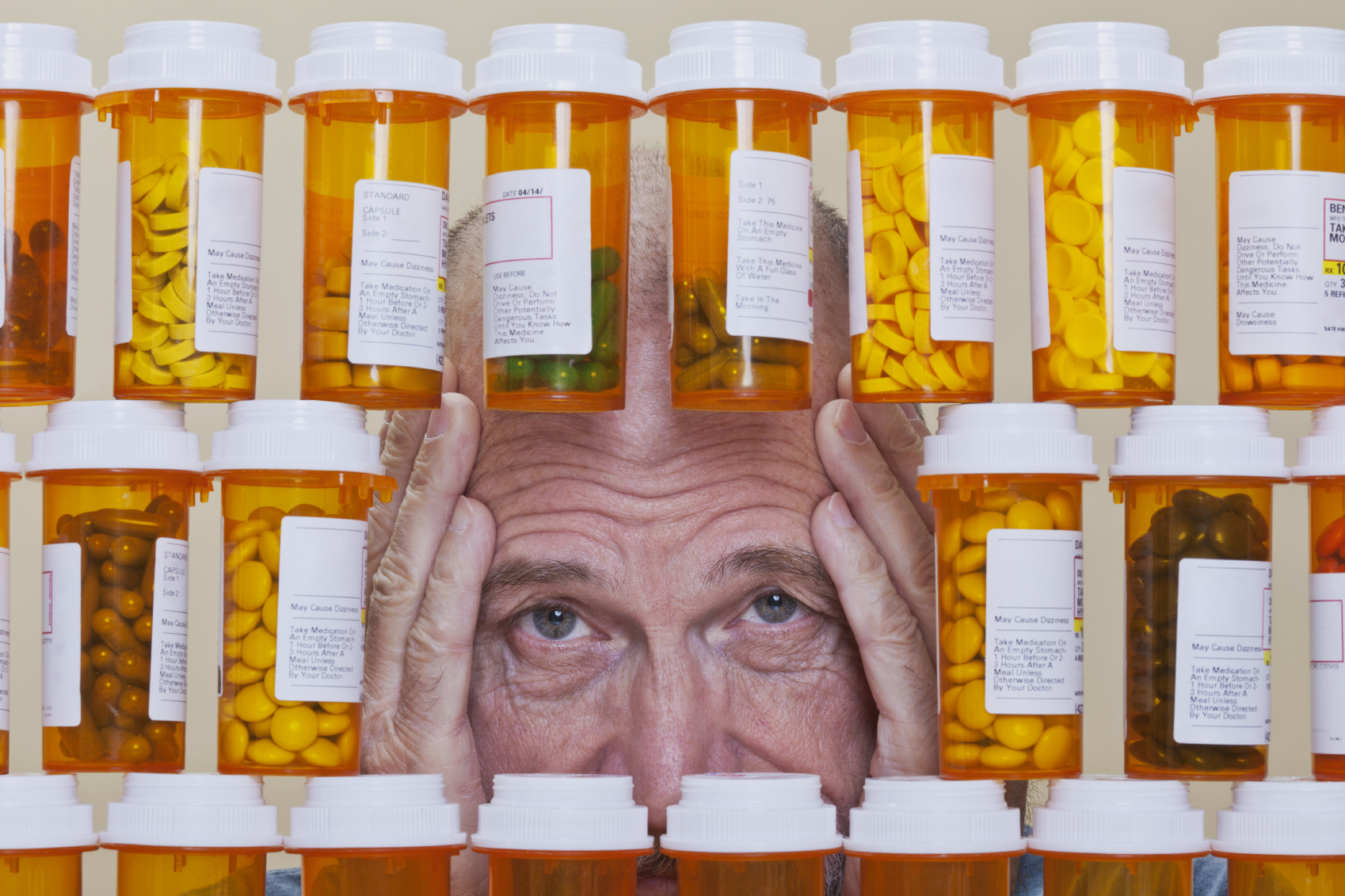

- The most shocking fact about medication and older adults is that adverse effects from drugs are among the most significant dangers in society, often leading to death and injury. According to Cruikshank 2013), over 100,000 Americans die each year from adverse drug reactions, one million are severely injured, and two million are harmed. I understand that medications can counteract each other and cause various side effects such as fatigue, drowsiness, and other harmful reactions, which can result in injuries. However, I never realized that drugs could account for 100,000 deaths and one million injuries annually. These are daunting statistics that should prompt doctors to use greater caution when prescribing medications. The risk is far too significant for the public to remain uninformed. Personally, after reading this, I am growing increasingly concerned for my elderly family members who are currently taking multiple medications, now realizing the serious risks involved.
- Cruikshank did an excellent job informing readers about the statistics and realities of adverse drug reactions. However, I was particularly concerned by the information that women in nursing homes are more at risk for these reactions. The fact that nurses sometimes mix up medications, due to similar drug names or other errors, highlights a serious issue in elder care. (Cruikshank, 2013) points out that overmedicating nursing home residents is often a gendered issue, disproportionately affecting women. This creates a deeply unsettling feeling for me, not only as a woman who will inevitably grow older, but also as someone aware of how many elders rely on these facilities for care. These institutions are meant to be staffed by trained, trusted professionals, yet mistakes in medication administration still occur. That is completely unacceptable. No excuse can justify putting lives at risk due to negligence or systemic shortcomings. Once again, we see a blatant disregard for the elderly population, as if their lives matter less simply because they are in the later stages of life. Everyone deserves dignity, respect, and competent care, regardless of age. I was especially struck by Cruikshank’s discussion of how aging affects blood flow, making it feel as though the body is working against you. It’s disheartening to think that no medication can fully reverse what biology sets in motion.
- I appreciated how the doctor went beyond the standard medical interview questions and followed his intuition to ask more thoughtful and personal ones. This approach allowed him to see Dimitri’s situation through the eyes of his daughter, Irina, offering a snapshot of his life beyond the clinical diagnosis. We gained surface-level family history, but more importantly, we learned about Dimitri’s personality and behavior before his diagnosis. By taking the time to have deeper conversations with both the daughter and the wife, the doctor was able to gather critical insights into Dimitri’s condition, and ultimately realized that he was being overmedicated. It’s unfortunate that some doctors are quick to prescribe more drugs without fully acknowledging the risks involved. In many cases, patients are misdiagnosed with conditions like Parkinson’s disease, simply because no one takes the time to investigate further. People can be too quick to label and diagnose without doing the proper research. This conversation with the family also gave the doctor a better understanding of their perspective and allowed for important discussions about how they plan to handle the situation if Dimitri’s condition worsens. Conversations like these create space for vulnerability and help families and doctors navigate difficult decisions together.
- Aronson offers powerful insight into the perspective of a doctor who both treats and deeply understands dementia. She notes that during her time in medical school, the term “dementia” was barely mentioned. In fact, she explains that in most medical schools, dementia received only a brief, passing reference (Aronson, 2019, p. 49). This lack of emphasis is troubling, especially when we consider the real-life impact of the disease, as seen in the Memory Tapes assignment. There, we watched individuals document their journeys with dementia and saw how quickly and dramatically the disease can progress, such as one patient who went from sitting up and engaging with others to, just months later, being hospitalized, bedridden, and unable to eat. Aronson also emphasizes that even major health organizations like the CDC often fail to list dementia or Alzheimer’s disease as leading causes of death. This omission is alarming, considering how widespread and devastating these conditions are in our society. It raises an important question: Why is dementia so neglected as a disease, despite affecting such a large portion of the population? We are now seeing firsthand how the medical world often overlooks both dementia and the elderly population it primarily affects. Dementia is a neglected disease.
- I really appreciated that someone who helped create standardized rules and guidelines was able to witness firsthand how insufficient those systems can be in practice. It highlights a crucial truth: no two people are exactly the same, even if they share similar diagnoses. Diseases affect each individual differently, and what works as a treatment plan for one patient may not be effective for another. I was glad to see that Gabow recognized this in a real-world context. It reinforces the idea that patients must be treated as individuals, with care plans tailored to their specific needs. There is no such thing as a one-size-fits-all approach in medicine. Hopefully, this example will inspire more healthcare professionals to prioritize personalized treatment plans over generalized ones and to move away from simply categorizing patients based on broad guidelines.
References
Aronson, L. (2019). Elderhood: redefining aging, transforming medicine, reimagining life (1st ed.). Bloomsbury US Trade.
Cruikshank, M. (2013). Learning to be old: gender, culture, and aging (3rd ed.). Bloomsbury US Non-Trade.
Hi! Iyanna, like you, I was truly shocked by the staggering number of deaths and injuries caused by adverse drug reactions each year. Over 100,000 deaths and one million injuries are alarming statistics that I had no idea were so prevalent in America. It really challenged the way I’ve always viewed medication as mostly helpful rather than potentially harmful, especially for older adults. I also appreciated your discussion of individualized care, which we saw the impact through Gabow’s mother’s story. The example really stood out to me because it showed how alternative and personalized care approaches, especially when grounded in conversations with the patient’s values, can make a major difference in quality of life. I agree. It reinforces the need for medical professionals to move away from a one-size-fits-all approach and consider tailored plans that honor the unique needs and preferences of each person.
Reading these statistics in the book really opened my eyes to how dangerous medications can be for older adults. Before reading, I had no idea that over 100,000 people die each year from drug reactions, and that number is honestly terrifying. It makes me think about my own family members who take multiple prescriptions and how much trust we put in doctors to get it right.
I was also struck by the fact that women in nursing homes are especially at risk. It feels so unfair that the people who should be cared for the most often end up neglected. Aronson’s point about dementia being barely mentioned in medical training was also frustrating to read. If doctors aren’t being taught to recognize or prioritize dementia, no wonder so many older adults slip through the cracks. It makes me realize how important it is to treat every patient as an individual, rather than just a diagnosis.
I agree, and I was shocked by the statistics from Cruikshank. They are staggering and highlight why medication safety must be prioritized at every level of care. Before reading this chapter, I did not know that so many people passed away from something as simple as drug interactions, particularly since it goes through a doctor, but also a pharmacist, who should also be aware of drug interactions or overlaps. I also appreciate your emphasis on Aronson’s narrative; her insistence on listening to families and personal histories reveals how critical individualized care is. Too often, patients are reduced to diagnoses and prescriptions when what they really need is holistic evaluation and respect for their personhood. Cruikshank and Aronson remind us that safety, dignity, and individualized approaches are not optional but essential to quality care and, therefore, quality of life.
Iyanna,
Many of the concerns you raise in your discussion are, at their root, examples of ageism that we discussed earlier and will talk about more in the second half of the semester. We don’t address the needs of older adults because we often want to avoid dealing with the fact that we will all age. Our society rewards youth.
There is a real paradox when we think about our relationship to medical care as we age. We truly do need the help, advice and expertise of the medical profession. There have been many medical advances that allow us to live long lives. However, we also need to develop a healthy skepticism of always taking a medical approach to every problem. That means we need to see our health care professionals as a partner – not as a. God. That is hard for many older adults today. It will be interesting to see if that changes as the younger generations age.
Nice job on this post.
Dr P