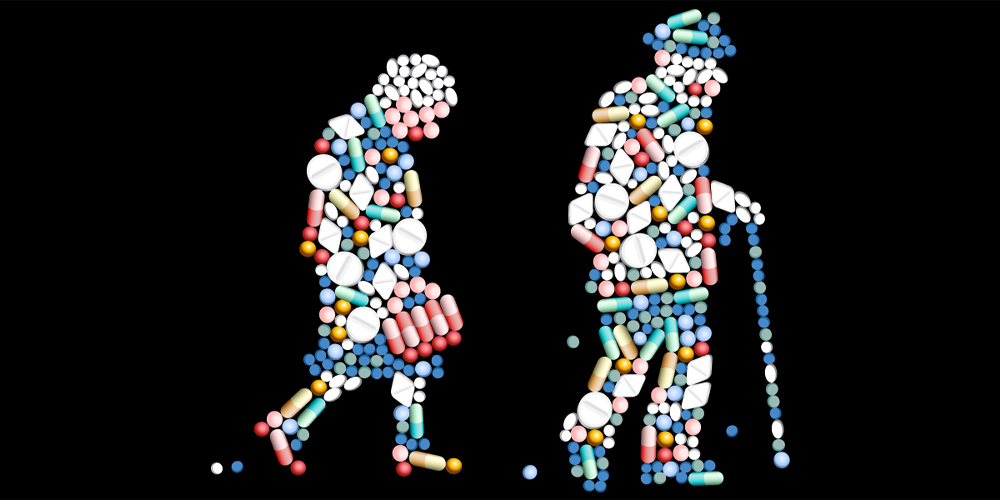

What surprised me most about the readings was that people over 65 make up 13% of the population but consume 34% of all prescription medications with 40% of people 65 and older taking at least 5 medications daily. I knew that pharmaceutical companies heavily profited from illness, but I didn’t realize how much this affected older adults. What also surprise me was how normal aging changes like decrease liver function make it more difficult for older adults to metabolize medications. This means that older adults more commonly experienced side effects, and the side effects are often mistaken for new conditions which leads to medical practitioners prescribing more medications. This influences a cycle of over medication rather than advocating for true healing. Another fact that didn’t so much surprise me as it did anger me was that 50 to 80 percent of nursing home residents were given anti-psychotic medications to make them easier for nursing home staff to manage. It frustrates me that such powerful medications are used as a shortcut to control clients at nursing. I understand that nursing homes are often understaffed and overwhelmed, which makes it tempting to rely on medication to handle their massive caseload. The side effects of the unnecessary medications can actually lead to worse health outcomes and worse quality of life for nursing home residents. The practice of her medication also reflects a deeper social issue of how older adults are often seen as burdens and valued which then gives the medical system permission to dehumanize them. This leads to nursing home residence being treated as problems to be managed rather than seeing them as a whole person who has physical and emotional needs just like the rest of society.
I thought Cruikshank’s analysis was interesting. Her explanation of the biological changes in aging which make older adults. More vulnerable to medication. Side effects was very informative. The solutions she propose such as prescribing lower dose of medication, and reevaluating medication’s regularly both seem simple in necessary. I also appreciated her focus on exploring medication free alternatives when possible instead of automatically deferring to prescribing medication’s. I’ll also like her idea of a drug-free nursing home by utilizing alternative medicine and interventions before medication’s are considered. I believe that long-term it would make nursing home staff’s jobs easier because their clients would be more capable of completing ADLs which decreases the amount of daily tasks nursing home staff have to complete.
Cruikshank’s discussion was very informative of the many factors that contribute to adverse health outcomes in older adulthood and thus furthered my fears of aging. I worry about losing my independence and being defined by my diagnosis, but she highlighted in her critique of over medication in older adults. I fear that I will be at the mercy of the medical system and who will dehumanize me and prescribe medication for the side effects of the medication’s I’m already on. I also found her push for geriatric specialist and utilizing medication free alternatives as a sign of hope. The pharmaceutical industry has a lot of authority in US society to where every physical and mental symptom is first treated with medication before alternative solutions are even considered. Cruikshank reported that a reason for this is US societies emphasis on utilizing whatever intervention is quickest and easiest when the better and healthy solutions may take more time and effort to implement.
Aronson’s conversation with Irina was very thoughtful and powerful. They asked very thoughtful questions to get a well-rounded perspective on Dimitri’s condition. I also thought that it was very smart of them to ask about Dimitri’s behavior and functioning two weeks earlier, two months earlier, six months earlier, and a year earlier so that they could effectively evaluate how quickly his condition was progressing. When Aronson indicated that his rapid decline may be drug induced, it was shocking because I did not realize how closely symptoms of over medication can mirror the symptoms of Parkinson’s disease.
Aronson’s discussion showed more of how the medical system often fails to support. The human needs of older adults diagnosed with dementia while the memory loss tapes showed more of the emotional strain and daily struggles of a person with a dementia diagnosis. I also think that it’s interesting that alternative medical professionals are not invited to gerontology conferences. I believe this decision is intentional as pharmaceutical companies is controlled most of the medical industry. By not inviting alternative medical practitioners, pharmaceutical companies maintain control, and influence over the medical field and continue to profit from over medication of older adults.
The example Aronson wrote about Gabow’s mother was very important in that one medical standard should not be the standard for every client. It’s interesting seeing a medical professional’s reaction to the system they work in being utilized by someone who they know personally. She recognized that her mother didn’t fit into the standard of care that she created and effectively advocated for her mother’s unique needs. My worry is for those clients and their family members who are not properly informed about the medical care system and alternative to it. Medical professionals are in a position of authority, and when someone experiences a medical emergency, they are at the mercy of the medical practitioner’s expertise, unless they have knowledge of the medical interventions being utilized or alternative interventions and are confident enough to advocate for their unique needs.
Aronson, L. (2019). 4. Child. In Elderhood: redefining aging, transforming medicine, reimaging life (Vol. 7, Issue 1). Bloomsbury Publishing.
Cruikshank, M. (2013). 4. Overmedicating Old Americans. In Learning to be old: gender, culture, and aging (3rd ed.). Rowman & Littlefield Publishers.
I was horrified by many of the same statistics. You make excellent points about the medications leading to worse outcomes and the dehumanization of older adults. It’s really heartbreaking that at the end of life, they are seen as outliving their usefulness and as a problem to be managed, rather than a human being who is still alive, with needs and wants. I agree with your analysis of Cruikshank’s explanation of biological changes not being considered in prescribing practices leading to reduced functioning in terms of ADLs and the hardships for nursing staff and caregivers. It’s sad that drug companies see older people as a market to make a profit rather than people with specific and unique biological and psychological needs. I think medicine in general needs to separate from the pharmaceutical industry and focus on prevention, healing, and the original oath of medicine to do no harm. I agree with you that the pharmaceutical industry has too much power and over the past century, alternative medicine and practices have been pushed out of the mainstream and presented as quackery, rather than viable alternatives to standards of care. I, too, worry about falling prey to the medical system that is moving too fast to take my needs as an older adult into consideration in order to maximize outcomes and profits. I think we all need to be focused on preventative care and taking the best care we can of our bodies. People are unique and their medical treatments and plans should be as well. I am so grateful to have this information now about medications and plan to advocate for myself and question everything! The best thing we can do is try to live as healthfully as possible so that we don’t need medications. I want everyone I know to read this chapter!
I am dismayed that nursing homes rely on medication for symptoms that may look like mental illness, instead of having comprehensive care for issues such as depression, anxiety, and loneliness. It is not common to utilize alternative methods such as music or art therapy in addition to traditional therapy as a solution while seeking to figure out the best method to handle mental illness in older adults. Too many times insurance will not pay for anything that is new even when there is research showing its efficacy. The medical industry is stuck in a rut, one that relies on chemicals, and has woefully ignored the resource out there for nutrition and alternative therapies. Until they understand that there are methods which could benefit patients, they are inadvertently doing harm through lack of action.
I connected with your point about how symptoms of overmedication can mimic conditions like Parkinson’s disease. In my post, I also discussed Aronson’s conversation with Irina and Svetlana, and I was struck by how quickly Dimitri improved once certain medications were stopped. It made me realize just how easy it is for medical professionals to misinterpret drug side effects as new illnesses, which only fuels the cycle of overprescribing. Like you, I found it shocking, and a bit unsettling, that the line between medication side effects and actual disease can be so blurry, and that families and attentive staff often play the most important role in catching those mistakes. This really shows how critical it is to advocate for regular medication reviews and careful monitoring for older adults
Hey Gianna!
Great post! I completely agree with you on what surprised you the most and i also thought her analysis was interesting and very informative since she gave other solutions such as lower dosage medications and more importantly alternative medicine since its something i believe in. Its good to not put humans on high dose medications right from the start. I think its best if we try alternative things and leave intense medicine as a last resort. Thank you for sharing!
Gianna,
Your post was well done and very thoughtful. I appreciated the detail of your answers and discussions. My only feedback would be to add one parenthetical citation when you are referring to specific information from the text, so you can identify where specifically it came from. Just as one example you could have used a reference when you quoted specific data and percentages she used in the text.
Otherwise, well done.
Dr P