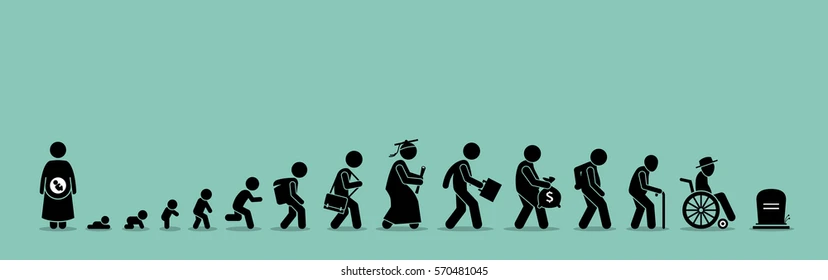

One thing I would like to share about myself is that I recently became interested in older adults and aging. My grandfather is a veteran and has told me his experience with veteran affairs, which intrigued me about aging.
My experience with older adults is very mixed. I mainly interact with my grandparents, and my experience with them has been outstanding. I’m used to doing a lot of the heavy lifting with them and explaining certain things. For the most part, my grandparents are very capable and do not currently have any ailments that make living extremely difficult. My professional experience with older adults is somewhat slim. I currently work at a smoothie shop and have the occasional older customer. In those cases, I interact with people who are kind and need some explaining. On the other side of the spectrum, I have interacted with older adults who are very unkind and disrespectful to the younger generation.
I hope to understand better aging and the research behind how it impacts older adults. The media has changed what aging looks like and how older adults are truly affected. I also want to understand how to interact better with older adults outside of trying to coddle them.
A) Older adulthood and later life refer to the final range of your life. That’s the stage of your life where most of your cognition and mobility have been developed and are now beginning to deteriorate or become stagnant. When I hear these terms, I imagine someone in their late sixties or older. I suppose someone with a few wrinkles and gray hair. I guess someone with a phone doesn’t use it often because they don’t need to. I imagine someone who still has mobility but walks a little slower or can lift less.
B) The chronological age I would consider myself an older adult is around sixty-five to seventy years old .
C) I imagine I will have salt and pepper or completely gray hair at this age. I will feel slightly tired, but hope to have the same mobility and energy. I believe my health will be decent. I imagine I may end up with high blood pressure and sore joints because that’s common in my family. I will watch TV with my family, read, cook, and enjoy nature. I know for sure that reading will bring me the most pleasure. I’m sure being with my family will too. Imagine that by then, I’ll be married and have grandchildren. I would want to spend every moment I could with them.
D) The main problem of age that I fear is being unable to move as much or lift things independently. I am also concerned with my life without the people I care about now. By the time I’m older, I’m sure my mother and some of my friends and some of my friends may not be alive. That’s concerning because I am super independent, relying on things seems like torture. Not having the people present in my life now is also concerning because I’ll have to live without them. I know the pain won’t stay forever, but knowing that it’s there will be hard.
Hello Ariana
My dad was also a Veteran. I love talking with them. I’ve had friends who served, who both young and older. Many of them have the extra aches and pains that I don’t have and I respect them for having put their health at risk to keep me safe. The part you shared about fear of missing those who pass when you are older has happened to me a lot recently, now that I’m older middle aged. That’s one reason I keep making new friends. We just have to keep busy, and keep involved.
Hi Ariana! My grandfather is also a veteran, and he is currently battling dementia. He receives help from the VA, but it’s not enough, so my grandmother has to care for him 24/7. This situation makes me reflect on how they are both older adults, yet they are at very different stages of life. I believe this is one of the reasons I took this class: to understand better the aging process and how it isn’t linear. Great post!
Ariana,
Thank you for sharing your experiences. I appreciate it as do your fellow students.
I suspect your grandfather has had a number of stories about the VA and his care. I would be interested in his stories. When you talk about later life, I think you will begin to see many stages. Later life may no longer mean “final” range. I think you will enjoy Aronson, who talks about a number of stages in later life – in her definition of elderhood. And Cruikshank’s will challenge your idea that cognition and mobility become stagnant. Aging is complex and nuanced, and all that we read and hear about in this class will make that clearer. I look forward to many conversations.
Dr P