
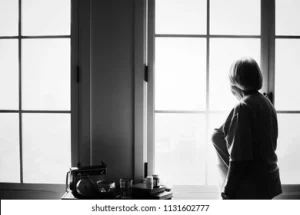
When I picture myself in my later years, the fear that rises to the surface isn’t physical illness or memory loss, it’s the possibility of becoming isolated. In my first blog post, I briefly mentioned how watching people I love get older, become ill, or pass away can slowly shrink your social world. But now I’ve taken the time to really sit with that fear to imagine what it would mean if isolation became part of my own aging journey.
If I were truly alone in older age, I believe the impact would reach every part of my life. Physically, I might lose motivation to take care of myself. No one to encourage movement, no one to share meals with, no one to notice the changes in my health. Even small things, like making it to doctor’s appointments or remembering to eat on time, might become harder.
Emotionally, I know I’d feel invisible. For someone who has always found purpose in relationships and community, the silence would be deafening. It would probably lead to periods of sadness, anxiety, and even resentment. I might begin to question if my presence still matters in the world.
Socially, I’d feel disconnected from the identity I’ve built over time. I’ve been a caregiver, a guide, a strong support for others. But isolation would flip that script. I could find myself in a position where I’m no longer being asked for advice or invited into someone’s world, which would leave a hole in mine.
Financially, isolation could bring new burdens. If I didn’t have family or friends close by, I might need to hire help for tasks I once did myself or leaned on others for. Things like transportation, grocery shopping, or just companionship could come at a cost, one that I may not be fully prepared for on a fixed income.
If I had to live through that, I think my initial emotions would be fear and grief. Fear of what each day might feel like without connection, and grief for the life I imagined, one filled with purpose, activity, and people.
Changing the Vision
My vision of aging has always included a warm home, filled with family and conversation. I imagine mentoring young women, offering support to my adult children, and maybe even working part-time in the community. That vision includes joy, noise, shared meals, and Sunday calls just to check in.
But if isolation entered that picture, much would shift. I’d have to find new ways to connect, maybe through virtual communities, local programs, or writing. The pace of life would slow. I might no longer be surrounded by others, but I’d have to find connection within myself and in new spaces. My core values, faith, resilience, and purpose would need to carry more weight than ever.
Applying the CARA Model and GRRs
The CARA Model—Coping, Adaptation, and Resilience in Aging—reminds me that while I may not avoid isolation entirely, I can prepare myself emotionally and mentally for how I respond.
To cope with isolation, I’d draw on my Generalized Resistance Resources (GRRs):
Spiritual grounding – My faith has always carried me. It gives me peace and reminds me that I am never truly alone, even in solitude.
Creativity – Writing, crafting, decorating, and creating beauty have always been sources of joy. These would help me maintain a sense of purpose and self-expression.
Life experience – I’ve already faced hard chapters and rebuilt myself more than once. That inner strength would become one of my greatest tools.
Access to services and community spaces – Whether virtual support groups, local senior programs, or faith-based gatherings, I would push myself to reach out, even when it feels uncomfortable.
Resilience, in this case, wouldn’t mean pretending the loneliness isn’t there. It would mean learning to live alongside it—and still choosing to wake up each day with intention, heart, and hope.
Article Summary: The Loneliness of Aging
To better understand the reality of late-life isolation, I read the article The Loneliness of Aging by J. Somes (2021). The article discusses how loneliness has become one of the most serious health risks facing older adults. Somes explains that the effects of social disconnection are not just emotional but deeply physical—contributing to stress, heart problems, cognitive decline, and even earlier mortality.
What stood out to me most was how this loneliness often isn’t visible to others. Older adults may appear fine on the outside, but inside, they’re carrying grief, fear, and a longing to be seen. The article also points out that nurses and emergency room staff are often the first to notice these signs—yet, even then, the solutions are not simple.
Reading this helped me realize that isolation is not just a personal fear—it’s a growing public health issue. It gave weight to my concerns and made me even more committed to finding ways to remain connected as I age (Somes, 2021).
Final Reflection
I don’t want to age in silence. I want to stay present, visible, and engaged. Yes, the possibility of isolation is real. But so is my determination. With the tools I’ve built, the faith that grounds me, and the creativity that sustains me, I believe I can age with intention—even when the world gets quiet.
Somes, J. (2021). The loneliness of aging. Journal of Emergency Nursing, 47(1), 112–115. https://www.jenonline.org/article/S0099-1767(20)30425-6/fulltext
Great Blog!! Your post really resonated with me because isolation is something I’ve also thought a lot about when imagining older adulthood. I appreciate how you described not just the emotional side of isolation, but also the physical, social, and financial ripple effects. It reminded me that aging isn’t only about what happens inside our bodies—it’s also about the support systems (or lack of them) around us.
I love your approach to the subject of loneliness. You were able to assess even the nuanced ways that it will impact the entirety of your life. As it is, I believe you are already preparing your future self well for the possibility of isolation. The way you have built a church community and engage with your given or chosen family, even now, establishes a strong groundwork for a life that may be more dependent on others. The fact that loneliness is being seen as a systemic issue gives me hope that we can have more established ways of supporting older adults in ways that enrich all generations.
Tammara,
You describe your concerns about aging very well. It is clear that you feel strongly about staying connected and not being isolated. The thing I found so interesting is that you don’t talk about the causes of isolation. THe first paragraph of your article talks about the “risk factors” for isolation, right? Ity seems like the way you work against isolation is to be aware of those risk factors. They also talk about how we are biologically and socially programmed to need social networks. You talk a great deal about the strength of your social networks.
I think sometimes we get caught up in ageism without even knowing it. There is no rule that aging automatically means loneliness. Focus on the risk factors and how to avoid them.
My only crticism is that you reference data in the article without citing the source and location.
Dr P