
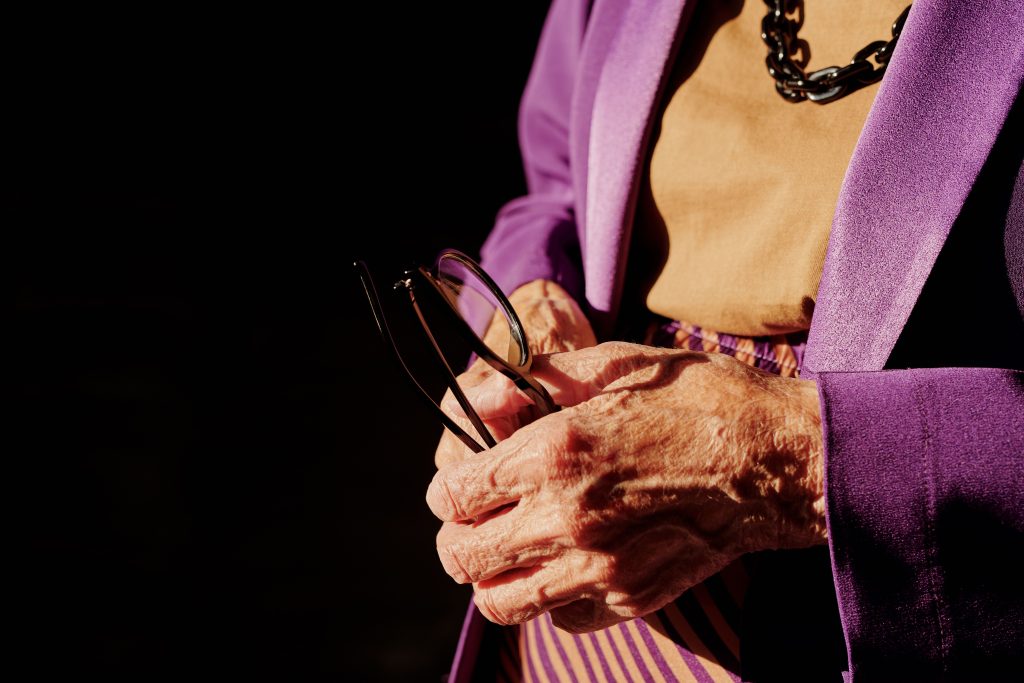
(Wagner, 2020).
Introductions
Hello everyone! My name is Courteney Smith. I’m an online-only student, mostly because I am temporarily living with my husband who was stationed in Virginia by the Navy. I was born and raised in Georgia, though, and I can’t wait to move back sometime soon. I’m pursuing my BSW and am deciding between specializing in working with older adults or within the mental health field. I’m drawn to the gerontological side of social work because I have been surrounded by older people for much of my life. Growing up, I lived in a house with my grandmother on my mother’s side, both sets of my grandparents on my father’s side, and even my two paternal great-grandmothers! It was a full house, but being partially raised by these older people softened my heart towards the struggles older people often go through as I felt uniquely attached to them being an only child. As I grew into a young woman, I got to witness first-hand how age can affect people mentally and physically. Oftentimes, I feel that aging is so hated within our society, and that these groups are often treated poorly by the majority. While I have not worked professionally around groups of people, I did ‘shadow’ a close friend of mine who worked at a nursing home for a day just to better understand how nursing homes work and how these groups are treated within living communities. The experience further cemented my interest in this population and my desire to help those throughout the aging process. I’m hoping this class will help me to better understand the roles social workers have in caring for these populations and how we can serve these groups with dignity and respect.
On Aging
As I think about becoming an older person, I do feel a certain amount of fear and disdain. It’s hard not to be influenced by the great majority of society today, which is, for the most part, currently imbued with “anti-aging” trends. It is not hard to see this stigma when we look at the rise of products designed to make people look and feel younger. I am uncomfortable with the truth that one day I will experience wrinkles, sagging skin, and be unable to engage in activities I currently enjoy. I wonder how others will treat me when I am not conventionally attractive, or when I can no longer care for myself. These bodily changes, the possible loss of autonomy, and losing the ones that I love, such as my husband, are the things which cause me to be most uneasy. On the other hand, though, there is a optimism I have towards the idea of grandchildren and growing old with the one l love. In truth, though, these positives do not outweigh the general discomfort that I feel when I picture myself entering into older adulthood.
When I stop to fully consider what I may be like in my 70s (the age when I first recognized that my grandparents were ‘older’ than most, likely because of their emerging health conditions that differentiated them from, say, my parents), I imagine myself physically along the same lines I just mentioned (i.e., wrinkles, greying hair, etc.). Because of the physical ailments that people around me experienced as they grew older, it is relatively difficult to imagine that I will be able to enjoy the hobbies I enjoy now such as going on long walks, exploring, and going on trips–although I do acknowledge that many older adults are fully capable of living full, adventurous lives even as they age. Still, because of the family that I grew up with who I witnessed grow older, it is hard to break myself from these concepts of ‘growing older’. So, I imagine I will have hobbies that are less intensive, such as reading or cooking. It’s hard to say what my personality might be like, but I imagine that, in truth, I will feel slightly depressed with my inability to do things that I once did, although I may enjoy the life that I have in that time.
Apart from the general societal stigma that is associated with aging, I feel that a lot of the ‘dread’ that comes from imagining myself as an older adult is associated with the physical ailments that I might experience. As I already discussed, the older people in my life suffered greatly because of their health. My grandmother on my mother’s side experienced severe pain as I was growing up due to rheumatoid arthritis and lupus, both conditions which my own mother is now suffering with as she ages. Due to this pain, my grandmother became depressed and addicted to pain killers in her late 70s, and eventually died from overusing her prescriptions. This experience, in addition to witnessing both my great-grandmother’s struggle with Alzheimer’s, has led me to become frightened by the prospect of aging. I think the idea of suffering and being unable to engage with the world that I can now, in addition to forgetting the ones that I love (or even who I am), is the root cause of these fears.
Yet, I also understand the negative impacts this stigma that I feel, and that society feels, towards the aging process can have on an aging individual. These ideas contribute to the idea that older individuals are ‘burdens’ to their loved ones–a feeling that the older people around me expressed frequently as they began to heavily depend on their family in their later years. This general ‘anti-aging’ philosophy discussed earlier likely contributes to the depression, such as in the case of my grandmother who became addicted to opioids, that individuals feel as they change and lose their autonomy. As social workers, it is important for us to address these stigmas and how they affect the older population–such as contributing to feelings of depression and hopelessness throughout the aging process. As I take this class, I hope that educating myself in aging practice will help me to break from this ‘fear’ of aging and understand ways in which I, as a social worker, can make a positive impact on these often heavily stigmatized groups.
References
Wagner, M. (2020, September 11). A senior adult’s wrinkled hands holding eyeglasses, showcasing age and elegance. Pexels.com. https://www.pexels.com/photo/person-holding-her-eyeglasses-5336160/
Hi Courteney!
I really enjoyed reading your post and learning about how your experiences with your grandparents and great-grandmothers shaped your interest in working with older adults. Growing up surrounded by multiple generations gave you a unique opportunity to see both the positive aspects of aging and some of the challenges that can come with it. I can definitely understand why those experiences would influence your decision to consider gerontological social work.
I also appreciated how open you were about your fears surrounding aging. I think many of us have similar concerns about losing our independence, experiencing health problems, or no longer being able to do the things we enjoy. Your point about society’s focus on “anti-aging” really stood out to me because we are constantly exposed to messages that make aging seem like something we should prevent instead of a natural part of life.
I especially agree with your point about older adults sometimes feeling like they are a burden when they begin depending more on their families. As future social workers, I think we have an important role in helping older adults maintain their dignity, independence, and sense of purpose while also challenging some of the negative stereotypes surrounding aging.
I hope this course helps both of us develop a more positive perspective on aging and gives us the knowledge and skills to better advocate for older adults. I look forward to learning alongside you this semester!
Hi Courteney,
Thank you for such an honest and transparent post. I have to admit, there is a part of me that feels uncomfortable with the thought of aging. It is something I subconsciously think about but try not to think too deeply about because it makes me feel uncomfortable and slightly sad. However, your transparency made me realize that having foresight about aging can actually be a good thing. Instead of one day waking up and realizing how much I have aged, I would rather be intentional about my life and prepare myself to age well and gracefully while embracing the process of getting older.
My mother has been a caretaker for many years, and I have heard many stories from her about the mistreatment and ageism that older adults can experience. It reminds me of how important it is to have knowledgeable and compassionate social workers in the field of gerontology. I also think that both of us having lived with our grandparents is such a valuable experience. It allowed us to see firsthand some of the challenges older adults face and, like you mentioned, helped soften our hearts toward this population. I think those experiences will serve us well in our careers as social workers.
Good luck with your journey in social work!
Hi Courteney, Great post! I also have always been drawn to older people due to living on the same street as my grandparents and great-grandma, in addition to seeing my paternal grandparents every weekend. Having older people in your life who support you and teach you about life is crucial in my opinion, and I am so glad I got to grow up around my family. I feel like recently I have heard a lot of negative things about older generations from some younger people that is very broad, and I hope to mitigate this through advocacy and awareness throughout my career.
Thank you for sharing that last paragraph. Depression in older adults is extremely overlooked, and often, without a supportive family, older adults are forgotten or neglected once they are unable to care for themselves. In addition, the price tag on aging is unattainable for most families in the United States. Home care prices are extremely high, and many living facilities that are affordable are not somewhere that families want to leave their loved one.
Great post, I hope we can connect throughout this class and share any thoughts or ideas!
Courteney,
I am glad to hear about your interest in working with older adults! We need social workers in this area of practice – and there are lots and lots of older adults. I find it fascinating that you shadowed a nursing home worker. I hope to hear more about that experience.
Your experience of family and living with grandparents and great-grandparents is somewhat unique today, and I think it has given you a sense of the good, the bad, and the ugly of aging. Aging brings physical differences and challenges. It also brings joy and new experiences. I am sorry the older adults in your family had difficulty with the aging process. That sometimes makes it more difficult to sort out our own fears, doesn’t it? My mother had Lupus (although it was discoid, not systemic, and therefore not as physically damaging), so I understand some of that fear. I suspect you are taking care of yourself and using the medical profession to help diagnose and prevent as much as you can.
All of us live with the fear of dementia, and partly that’s because we talk about it constantly in our culture. It has almost become like dementia and aging are automatically the same thing. And the discrimination and ageism are a real and difficult reality for all older adults – even if they don’t realize it themselves. We’ll spend some time talking about that issue. And even though we know that the stigma and discrimination is wrong, it’s really hard not to fall into the same trap and be afraid of experiencing aging ourselves.
I hope you will enjoy some of the things we will be reading and discussing, because I think they give a slightly different view of what it means to age in our culture. We will talk about fighting back – both in terms of the stigma and the assumptions! I look forward to the conversations.
Just an FYI – if you look at the video on the blog, or read my latest email, I talk about how to upload your featured image. If you scroll down to the bottom on the right side of your post window, you will find “Set Featured Image.” I walk you through this in my video on using the blog. This information is about halfway through. You might find it helpful, and it will place your image right at the top of the blog post. Here is a link to the video: https://gastate.view.usg.edu/d2l/le/lessons/3694485/topics/77644126
I liked the featured image, BTW.
Dr P