
Part One: Introduction
Hi everybody, I’m Brittany, though everyone knows me as Britt. I’m currently a senior studying social work, and I like decorating, browsing for vintage handbags, and I’m absolutely obsessed with shoes! I enjoy being creative and bringing my ideas to life by transforming ordinary rooms and projects into something beautiful.
I have known older people since I can remember, having spent a great deal of time with the older women in my family. I enjoyed listening to their stories, learning wisdom from them and always had a great deal of respect for them. Now, in my thirties, I have developed friendships with two women who are older than I am; one of them is 60 and the other will soon be 76.
For a profession, I worked as a caregiver for six years and I can honestly say that I really enjoyed working with older people. It never seemed as though I was going to work like a typical employee. I enjoyed talking, laughing, listening to their stories and, on some occasions, simply sitting together and keeping them company. I enjoyed the fact that when I walked through the door, I might be the pleasure of their day, and in truth, many times they became the pleasure of my day as well.
The thing I enjoyed most was the simple moments; we might laugh over something silly, talk about our lives, or they could tell me a story which they had told me before and I would listen once more. I wasn’t merely there to carry out a list of duties but was there so as to make their day a bit easier, a bit happier, and a bit less lonely.
Above all, I hope that this course will enable me to turn the love and compassion I already feel towards older people into something practical for my work as a social worker. I would like to get a better understanding of who they are, of their past experiences, of their needs, and even of the things they might find difficult to ask for. I also want to understand the situation that their families are in since ageing has an effect on everyone concerned. In the end, I would like older people to know that growing older does not mean that they cease to matter; they still deserve to have their voices heard, to be respected, to be looked after, and to be treated as the complete people that they have always been.
Part Two: The Meaning of Aging
I regard older adulthood and later life as being two distinct stages of life; although older adulthood is usually linked with a particular age, I also consider myself to be an older adult in certain respects even though I am only in my thirties. I have accumulated a great many life experiences, and some of these have caused me to feel considerably older than my real age. There are instances in which life experiences can have an ageing effect on a person in a way that a birthday or a number cannot.
The idea of older adulthood is one that I associate with a person who has lived a long life and as a result has acquired wisdom, experience, and a new perspective on the world. It doesn’t automatically occur to me to think of someone who is elderly or who is unable to look after themselves. I see such a person as one who is still able to be active, to work, to travel, to raise a family, to enjoy life, and to make arrangements for the future.
When I hear later life, I picture a different stage. I think about retirement, grandchildren and great-grandchildren, health changes, losing loved ones, needing more assistance, and reflecting on the life they have lived. But I also imagine laughter, family, storytelling, memories, and still having something valuable to contribute. Someone can be 70 and still be extremely active and independent, while someone much younger may have experienced things that completely changed their life. That’s why we can’t always define aging by a number. Later life shouldn’t mean that a person’s life is over. It is still life, just a different chapter of it.
I will be 70, which I consider the age of an older adult. I envision myself as vibrant, sophisticated, and still creative, and I want to remain stylish. I hope that my hair is beautiful and silver and that I am as healthy as possible. I plan to lead a healthy lifestyle by working out and maintaining a healthy diet. As I get older, one of the things that is really important to me is financial security. I do not want to spend my older years worrying about whether I can afford my basic needs or choosing between paying bills and enjoying my life. I have worked hard throughout my younger years, and when I get older, I want to be able to enjoy the lifestyle that I have become accustomed to without constantly stressing about money. I want to be able to travel, enjoy myself, spend time with my family, and do the things that make me happy without feeling like every decision has to be based on what I can or cannot afford. I know that getting older may bring unexpected expenses, especially for everyday living, so I want to prepare myself financially while I can. My goal is not to be rich; I want to be comfortable, independent, and able to enjoy the life I worked so hard to build.
I plan to spend my time with family and friends, sharing a lot of laughs. I still hope to have a pet because I love Toy Poodles. I want to spend quiet moments on the front porch in a rocking chair, traveling, and I definitely plan to continue collecting handbags and shoes. Knowing that I made it to an older adult, given all my experiences and what I overcame in my younger years, will bring me the most pleasure.
A particular part of aging that I fear when I think about later life is losing my independence. I have a hard time depending on other people now, so the thought of getting older and possibly having to depend on someone else for basic things honestly scares me. I worry about not being able to drive myself where I want to go, take care of my own home, make my own decisions, or get up and do something when I feel like doing it. When people lose their independence, sometimes they can start to decline pretty quickly because they are no longer doing the things that kept them active, involved, and feeling like themselves.
I also fear becoming isolated just because of my age. I would never want to feel like people stopped including me, visiting me, or listening to me simply because I got older. Loneliness can be just as difficult as some of the physical changes that come with aging. I would still want to laugh, have conversations, go places, be involved with my family and community, and feel like I have a purpose. One of my biggest fears about later life is not necessarily getting older itself, but feeling like I have lost my independence, my connections with other people, and the life that made me feel like me.
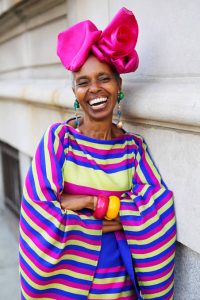
Britt, your post is incredibly warm and heartfelt, and it’s clear that your connection with older adults comes from a very genuine place. The way you describe your relationships from the women in your family to the clients you cared for shows such a deep respect for their wisdom, their stories, and their humanity. I really appreciate how you highlighted the simple moments, because those are often the ones that mean the most to people who may not get a lot of company or conversation throughout the day. It says a lot about your character that you didn’t just “do the job,” but truly showed up for people in a way that made their days brighter.
Your reflections on aging were also powerful. I love how you separated older adulthood from later life and explained how life experiences can age us in ways numbers don’t capture. That perspective is so real and relatable. Your vision of yourself at 70 vibrant, stylish, financially secure, surrounded by family, laughter, and even a Toy Poodle paints such a beautiful picture of aging with intention and joy. And your honesty about fearing the loss of independence and connection is something many people feel but don’t always say out loud. You expressed it with so much clarity and vulnerability.
Overall, your post shows compassion, insight, and a deep understanding of what older adults need and deserve. It’s clear you’re going to bring that same heart into your social work practice, and older adults will be lucky to have someone like you advocating for them.
Thank you so much, Monesha! I really appreciate your response because you truly understood what I was trying to say. I’ve always had a soft spot for older adults because sometimes they don’t need anything big they want someone to sit down, listen, laugh, and make them feel seen. And yes, I’m definitely claiming that 70-year-old version of me cute, financially secure, surrounded by family, and spoiling my little Toy Poodle!
Britt,
Thanks for sharing that with everyone. Your strong relationships with older adults give you a different perspective on the aging process. I also think being a caregiver, whether professionally or with family, gives you a unique viewpoint on older adults, the interesting things they have done in life, and how easy it is for them to feel lonely. I worked as the ED of a small nonprofit that served older adults. We gave them opportunities to come together, attend workshops and seminars, and eat lunch together. I was always surprised to be reminded of all the things they did – all the life they had lived – before I knew them. It’s easy to see only the older adult standing right in front of you and miss all the people and experiences that combined together to bring them exactly where they are. If we truly listen, we learn a lot, right?
Your distinction between “older adulthood” and “later life” tells me that you will appreciate Aronson’s book. She talks a lot about the differences between those stages. In aging practice, we often refer to the fourth chapter when we mean the older adulthood you reference. That’s when there is an opportunity to do all the things you desire in your description, when you really can enjoy your time as an older adult, free from so many responsibilities. It is the fifth chapter, which we discuss much less, that most often refers to “later life.” I think Aronson gives us an interesting perspective on the differences, albeit from a medical framework.
Your discussion about maintaining your independence is shared with many of your fellow classmates – and myself. We all want agency and control over our lives. That loss of independence is an important issue. But you will also hear from Cruikshank in next week’s readings about the importance of letting go of a need to be independent and the cultural burden of being “self-reliant.” I think you will find it interesting.
I am truly looking forward to the conversations.
Just an FYI – You are expected to utilize a featured image in your blog posts. If you look at the video on the blog, or read my latest email, I talk about how to upload your featured image. If you scroll down to the bottom on the right side of your post window, you will find “Set Featured Image.” I walk you through this in my video on using the blog. This information is about halfway through. You might find it helpful and it will place your image right at the top of the blog post. Here is the link to the video. https://gastate.view.usg.edu/d2l/le/lessons/3694485/topics/77644126
Dr P