
1. What surprised me about overmedicalization is how common and normalized it has become to prescribe multiple medications to older adults. Whenever my mother goes for a checkup, it seems as though she comes home with another prescription to add to the five or more medications she already takes. It sometimes feels like we live in a society that focuses more on managing health problems with medication than on addressing their underlying causes and reducing the need for medication.
2. The conversation with Irina reminded me how important it is to discuss a person’s wishes for end-of-life care while they can still speak for themselves. I realized that these conversations matter both for the person and for their family. They can help preserve the person’s dignity and spare loved ones the distress of making difficult decisions without knowing what the person would have wanted. Families often avoid these conversations because they are painful, but reading about Irina’s distress as she answered questions about her father showed me how helpful an earlier conversation might have been.
I was also struck by how Irina had noticed Dimitri’s health declining over the course of a year. By listening to her observations and reviewing changes in his medications, Aronson was able to consider the medications contributed to his decline.
3. Cruikshank discusses how Alzheimer’s disease has come to represent Americans’ fears about aging, especially the fear of losing independence. When we associate dementia with growing older, we risk treating it as inevitable and framing aging itself as negative. In South Korean culture, where I am from, growing older can also be associated with wisdom and a respected place in the family. Adult children are often expected to help care for their aging parents.
I think Aronson takes a more clinical approach. She looks at changes in a person’s health over time while considering their environment and what family members have noticed. Instead of assuming that a sudden decline is simply part of aging, she investigates whether an illness, medication, or another factor could be contributing to it.
I believe the view Cruikshank describes is still common in America. We continue to associate aging with decline, and we do not always provide older adults with the care they need. Still, I see signs of change. I hope we continue to learn more about aging and improve care so that older adults are treated with respect and dignity.
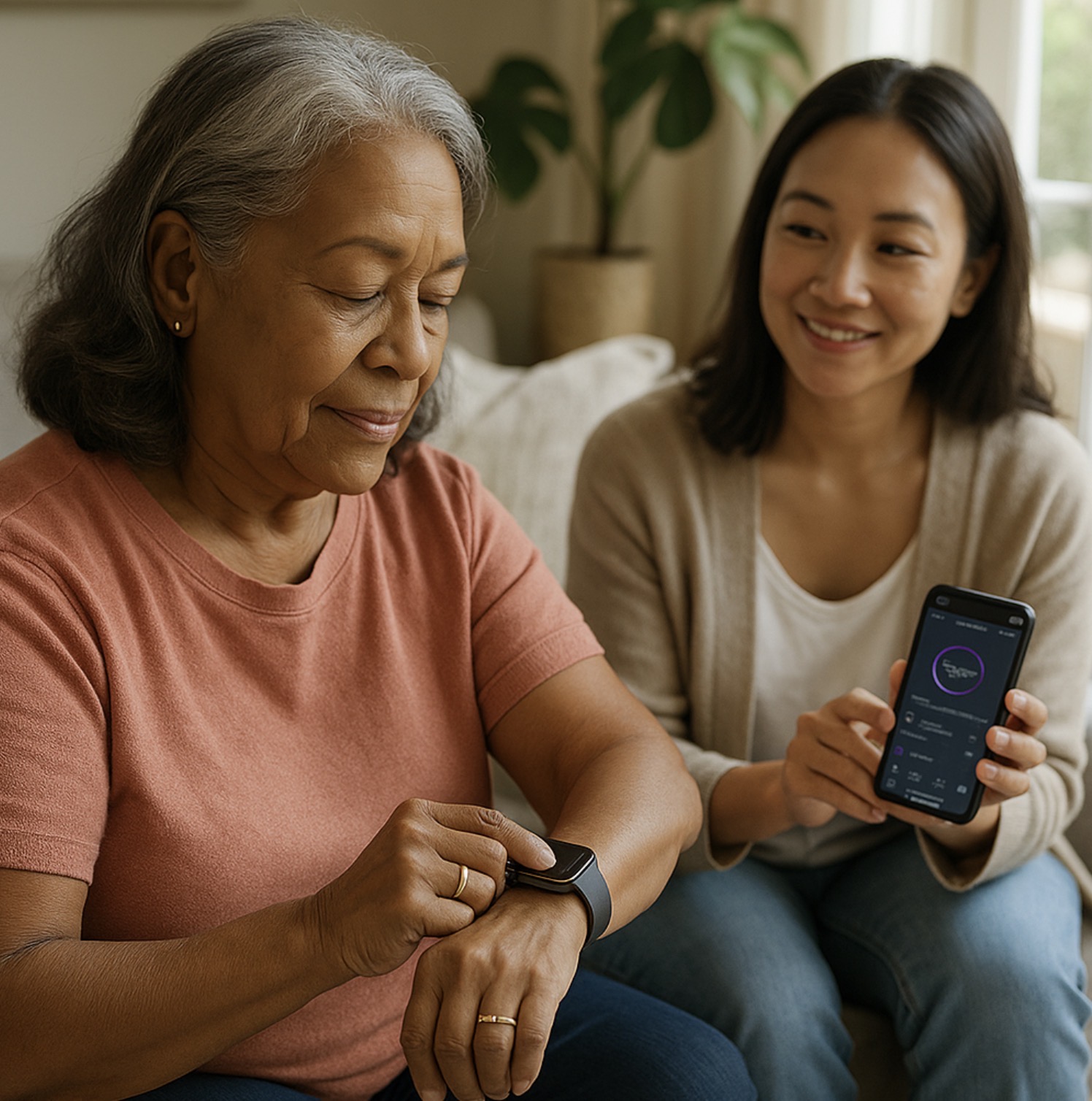
4. Menassa et al. (2025) explain that wearables could help people stay healthier as they age, but the data they collect is useful only when it informs sound decisions. These devices can track activity, sleep, walking patterns, heart rate, oxygen levels, and blood glucose. Such information may help people and clinicians notice changes, prevent health problems, or assess whether a treatment is working. In Dimitri’s case, a wearable might have helped reveal changes in his activity or walking over time, although it would not have identified the cause on its own. At the same time, constant monitoring could encourage people to interpret every change in their bodies as a medical problem.
Reference
Menassa, M., Wilmont, I., Beigrezaei, S., Knobbe, A., Arita, V. A., Valderrama, J. F., Bridge, L., Verschuren, W. M. M., Rennie, K. L., Franco, O. H., & van der Ouderaa, F. (2025). The future of healthy ageing: Wearables in public health, disease prevention and healthcare. Maturitas, 196, Article 108254. https://doi.org/10.1016/j.maturitas.2025.108254
Your example of your mother coming home from a checkup with another prescription made the issue of overmedicalization feel very real. I can understand why that would raise questions about whether someone is reviewing how all her medications work together, rather than looking at each condition separately.
I also appreciated your point about talking with family members before difficult care decisions arise. Irina’s observations about Dimitri’s decline were valuable, and her experience shows how much families may be asked to carry when a person’s wishes are unclear. Your comparison with South Korean culture added another perspective to the discussion of how we value older adults.
The question you raised about wearables is interesting: tracking a change is different from understanding its cause. I wonder how clinicians can use that information to ask better questions without making older adults feel that every change needs medical treatment.
Angie,
I share the same experience with you, in that I have witnessed older adults in my life given a cocktail of medications rather than addressing the main issue. My grandmother passed away when she was sixty-five years old because she became addicted to opiod medications and suffered serious side effects of those medications. My mom didn’t know until after she died that she had been seeing multiple doctors to get medications. She was a very independent woman, and trying to monitor her was extremely difficult. Rather than focus on the core of her problem, which was debilitating back and hip pain, doctors threw opioids at her because, at the time, opioids were not nearly as withheld as they are now. A lot her pain was dismissed as her growing older. She died in 2005, so you can imagine the different attitudes during that time period. Also, technology was not nearly as advanced, so I can’t put all the blame on not being thorough.
After she died, my mom received a diagnosis of lupus and rheumatoid arthritis in her 60s. My mom speculates her mother shared the same diagnosis, since they both had the same symptoms and levels of pain. I think stories like yours and the one Aronson shared in her article are so vital as they highlight the importance of being thorough with clients and not just prescribing medication because they are ‘elderly’.
I enjoyed reading your post and look forward to hearing more from you!
Hi Angie, you and I share the frustration and confusion about why our older loved ones come home from a doctor’s appointment with new medications and sometimes a new ailment. It’s baffling how normal it was for me to see my grandmother sort out 8-10 different pills every two weeks for her “problems.” Makes me wonder what would happen if she decided to consult a gerontologist to see if what she’s taking is even safe.
I will say reading about the wearable devices was new to me. I had never heard of or known they were doing research into something like that.
Angie,
You did a nice job on the questions in this blog post. It does seem like physicians move toward medication much too quickly here. It’s a bit different when you are seeing a gerontologist, but it is still common. Much of that happens because of pressure from the patient, who just wants to feel better.
I think Aronson does outline a different perspective on dementia, looking at the whole patient. And that is exactly what she did with Dimitri. That resulted in getting enough data – enough information about his overall health – that she could diagnose the cascading medication problem.
The article was interesting for sure. Is your premise that wearables might help deter over-medication? The assignment was to look for articles about overmedication of older adults, so I’m not sure where you were going with this one. And it would have been great to have an article that might have looked at issues closer to home, since we are dealing with this country’s culture.
Dr P