
1. The problematic aging situation I initially wrote about was Alzheimer’s. I believe it would negatively impact me physically, emotionally, socially, and financially. Alzheimer’s is a progressive disease that destroys brain cells, affecting memory and thinking. Physically, declining mental abilities could make it harder to complete everyday tasks and maintain my independence. Emotionally, losing memories and important parts of my life would be difficult for me and my family. Socially, I may become more isolated as communication and relationships become harder to maintain. Financially, needing additional care and assistance could become a major burden. Overall, Alzheimer’s is something I find especially concerning because of how it could affect so many areas of my life.
My initial feelings about this disease are sadness. My great grandmother is currently going through late stage dementia. She is almost 90, and her mental state is not the best. She cannot move around much and is no longer independent. It’s heartbreaking to know that she does not remember anyone, including my dad, the youngest of his siblings, who saw her mental decline happen in real time. By the time he was 8, he was considered an orphan.It’s hard to witness someone you love going through their own battle with a disease that has no cure and to see the effects it has on the people who love and care for them.
2. When I wrote about imagining my ideal life as an older adult, I pictured myself being fully able bodied and did not really think about serious declines in health or other significant challenges that could come with aging. Everything I imagined was mostly positive. Alzheimer’s would significantly change that ideal life. I probably would not be able to walk around and mingle with others the way I imagined, and I would have difficulty speaking or caring for myself. I could become confined to my home, or I could need to live in a facility if my family could no longer provide the level of care I needed. If caring for me became too much of a burden for them, I would at the very least want an in home private caretaker who could make sure I was safe, comfortable, and properly cared for. Either way, I know I would not be nearly as happy as I originally pictured myself.
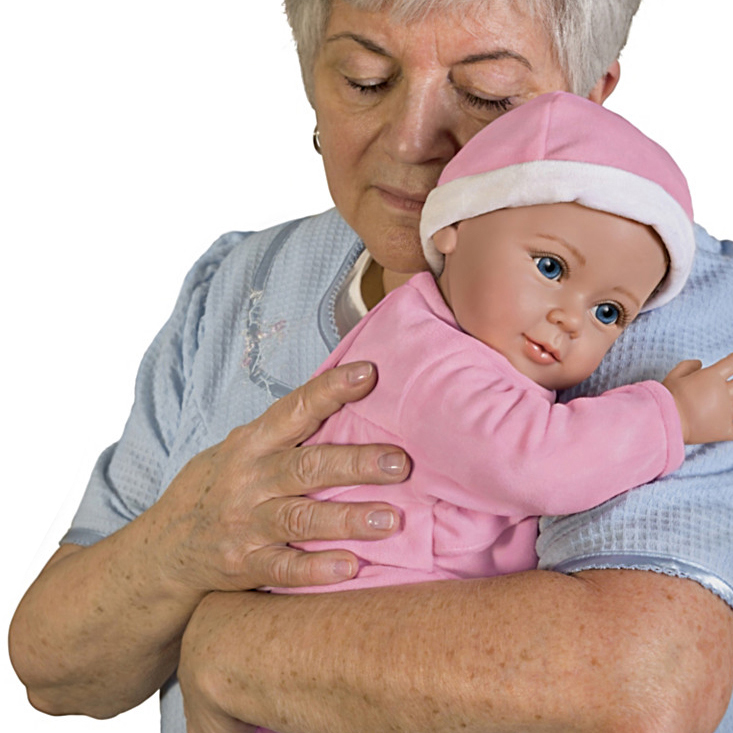
3. After watching the video, GRRs that would help me manage this situation and achieve resilience are sociocultural factors, such as having Spanish speaking family members and/or caretakers who understand Mexican traditions and customs, as well as developing a sense of purpose in life. For me, resilience would look like using Spanish to communicate in a way that feels more profound if I am ever at a loss for English words. Developing a sense of purpose, even if it means taking care of the reborn baby dolls in my family home, would allow me to stay connected to familiarity while still feeling a sense of purpose. Knowing when to ask for help would also be an important individual resource in this situation. By not putting the stress on myself to hide what I am going through or expecting others to figure it out, my coping efficacy could improve because I would be more willing to accept the support I need. To me, resilience would mean finding ways to maintain a sense of identity, purpose, and connection even as Alzheimer’s changes other parts of my life.
4. The first peer reviewed article talks about the profound impact Alzheimer’s has on family members. The article mentions that compared to other health conditions, Alzheimer’s is one of the more debilitating conditions, as everyone involved can struggle to connect as a result of changes in behaviors and personality. The data used in the study was collected online from family members and partners of people with dementia and Alzheimer’s disease. The results concluded that these diseases had a significant effect on their quality of life, with many participants feeling sad, worried, and frustrated.
A clinical intervention related to Alzheimer’s disease is the use of newer medications for early stage Alzheimer’s. With a new diagnostic framework to accompany drug development, these tools can detect changes related to the disease in the brain before clinical symptoms appear. Approved by the FDA in 2023 and 2024, Lecanemab and Donanemab are both anti amyloid immunotherapies that target early stage Alzheimer’s disease and mild dementia. By reducing amyloid plaques in the brain, these medications can slow the progression of cognitive decline.
References
Shah, R., Salek, M. S., Ali, F. M., Nixon, S. J., Otwombe, K., Ingram, J. R., & Finlay, A. Y. (2024). Dementia and Its Profound Impact on Family Members and Partners: A Large UK Cross-Sectional Study. Alzheimer disease and associated disorders, 38(4), 338–343. https://doi.org/10.1097/WAD.0000000000000647
Wu, C. K., & Fuh, J. L. (2025). A 2025 update on treatment strategies for the Alzheimer’s disease spectrum. Journal of the Chinese Medical Association : JCMA, 88(7), 495–502. https://doi.org/10.1097/JCMA.0000000000001252
Hi Ashley,
Alzheimer’s runs in my family; it is a painful disease and depletes everyone who is affected by it. I also fear that it would catch up to my parents or me, and as you mentioned, it would completely alter my life. Sociocultural factors like having a caregiver who speaks Spanish would be beneficial, as the connection and familiarity would be there. I hope they can develop a medication that helps combat alzheimer’s or at least slow the degeneration it does.
I’m sorry to hear about your great-grandmother having Alzheimer’s, as it must be difficult to see her like that.
I hope that doing this assignment gave you some type of comfort, and I enjoyed reading about how GRRs would help from a sociocultural factor, as I can relate!
Hi Ashley,
Alzheimer’s was also something that was most fearful for me. The person experiencing Alzheimer’s must be in distress, but for the people witnessing it, I can’t imagine how heartbreaking it can be. Thank you for sharing how you would manage this situation and build resilience, because now I can think of ways for my parents, who speak little English, to transition into older adulthood, and for me to consider arranging a Korean-speaking caretaker if ever needed. I speak English, so it didn’t occur to me that it’s important to have someone who is Korean, speaks and understands the culture, and can be my parents’ caretaker so they can keep their identity and be understood.
Hi Ashley,
I really connected with your post, especially when you shared about your great-grandmother. It has to be really hard watching someone you love go through dementia and seeing how much it changes their life and the lives of their family. I also liked how you talked about the importance of having family members or caregivers who understand your language and culture. I think feeling understood and being able to communicate in a familiar way could make a big difference, especially during such a difficult time. Your post also reminded me that resilience does not mean that everything is okay. Sometimes resilience is simply finding ways to stay connected to who you are and accepting help when you need it. I think that is an important perspective when thinking about aging and Alzheimer’s.
Ashley,
This post was really well done. I think it is hard to imagine any of us struggling with dementia, but the impact on the people around us, who love us, is significantly more profound. I have often thought that we should take all the brilliance of AI and push it totally toward solving this problem and cancer. Makes sense to me.
You have done a good job with the articles. These are two good ones. It is also a contrast, right? The negative impact on family and the positive changes in treatment. This is a difficult disease, and we will be talking more about it. The podcast about the Lost Memory Tapes may be difficult for you, so if it triggers some feelings, I recommend watching it in pieces, not all at once. It is an important look at dementia, but it’s hard to watch.
Thanks for sharing these thoughts.
Dr P