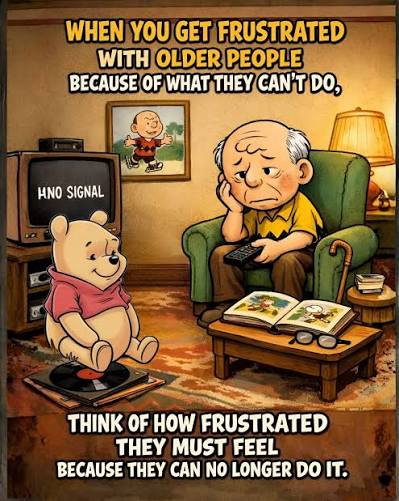

When I think about aging and the possibility of losing my independence, I honestly believe it would be one of the hardest adjustments for me. I am so used to being able to do things for myself, make my own decisions, go where I want to go, and take care of my own responsibilities. Having to depend on someone else would affect me physically, emotionally, socially, and financially. Even though I understand that aging is a natural part of life, understanding it and actually accepting changes in my own independence would probably be two very different things.
Physically, I think I would have a difficult time accepting that my body could no longer do some of the things that I was used to doing. I know myself well enough to know that I would probably try to do things anyway. I may overextend myself or end up with a few bumps and bruises because it would be hard for me to adjust to someone telling me that I should not or could not do something anymore. Taylor et al. (2024) helped me look at independence differently because their research shows that older adults view independence as more than simply being able to complete everyday tasks. Independence can also involve maintaining meaningful activities, autonomy, control, and the ability to continue doing the things that are important to them. That really connects with me because I think losing the ability to do the things I enjoy or having someone else decide what I can and cannot do would be extremely difficult.
Emotionally, I can say without a doubt that I would probably battle with depression. Losing independence could make me feel as though I were losing a part of myself. I think it would be difficult to go from being the person who helps other people to suddenly being the person who needs help. I might become frustrated, angry, embarrassed, or even stubborn because I would want to hold on to the life that I had before. Taylor et al. (2024) found that older adults’ sense of independence was connected to their individual values and the purpose they associated with remaining independent. This makes sense to me because independence is personal. What looks like independence to one person may not feel like independence to someone else.
Socially, I would more than likely isolate myself, especially in the beginning. I could see myself avoiding certain activities because I would not want people to see what I could no longer do. I might also feel like I was becoming a burden to my family and friends. The problem is that isolating myself could make the emotional part even worse. I would have to learn that accepting help does not necessarily mean giving up all of my independence. Taylor et al. (2024) found that older adults sometimes changed how they did things while still maintaining the purpose and meaning behind the activity. That makes me realize that I may have to redefine independence instead of seeing it as something that I either completely have or completely lose.
Financially, losing my independence could also create challenges. Depending on my circumstances, I could have additional expenses for transportation, healthcare, home modifications, or assistance with daily activities. If I still had the cognitive ability to manage my own finances, I could also see myself doing a lot of online shopping as a way of coping with all of the changes. I mention this because shopping is something I currently do sometimes when I am trying to make myself feel better. As an older adult, that could become a financial problem if I were using shopping to cope with depression, loneliness, or boredom. I would need people and resources around me who could support my independence without completely taking control away from me.
My Generalized Resistance Resources (GRRs) would play a huge part in how well I handled the situation. My family and friends could provide support, companionship, transportation, and simply be there when I needed somebody. Healthcare and mental health services could become important resources if I were struggling emotionally. Financial resources would also matter because money could determine what type of assistance, housing, transportation, or care I could afford. Community programs, senior programs, transportation services, and technology could help me remain connected and hold on to as much independence as possible.
Motamed-Jahromi and Kaveh (2021) identified several interventions that could also become important GRRs for me. Their systematic review found evidence supporting physical exercise, cognitive training, and multicomponent interventions for improving older adults’ ability to perform activities of daily living. Physical exercise could help me maintain my strength, mobility, and ability to perform everyday activities. Cognitive training could help me continue using skills such as problem-solving, memory, participation, and decision-making. A multicomponent approach would be especially helpful because my needs probably would not fit neatly into only one category. The authors also emphasize individualized interventions, age-friendly environments, and financial, psychological, and social support (Motamed-Jahromi & Kaveh, 2021). I think this is important because helping an older person maintain independence should not mean simply doing everything for them. The goal should be providing the right amount of support while still allowing that person to do as much as possible for themselves.
A serious question that I have thought about from time to time is whether these resources will actually be available when I need them. Given the state of the economy, will federally and state-funded programs for older adults still exist or have enough funding to meet the needs of the growing older population? Programs and resources such as Medicare, Medicaid, Meals on Wheels and other nutrition services, senior transportation programs, home- and community-based services, and local senior centers can make a major difference in helping older adults remain in their communities. Knowing that these types of resources exist now gives me some reassurance, but I still wonder what they will look like by the time I need them and whether there will be enough funding, staff, and services available.
Overall, thinking about losing my independence makes me realize that aging successfully would require more than just being physically healthy. I would have to learn how to adapt mentally, emotionally, socially, and financially. I would also have to learn that accepting some help does not mean that I am no longer independent. Motamed-Jahromi and Kaveh (2021) demonstrate that interventions can help older adults maintain their ability to perform daily activities, while Taylor et al. (2024) show that independence is much more personal and complex than simply being able to do everything without assistance. For me, the biggest challenge would probably be accepting change while still finding ways to remain myself.
References
Motamed-Jahromi, M., & Kaveh, M. H. (2021). Effective interventions on improving elderly’s independence in activity of daily living: A systematic review and logic model. Frontiers in Public Health, 8, 516151. https://pubmed.ncbi.nlm.nih.gov/33659228/
Taylor, E., Goodwin, V. A., Ball, S., Clegg, A., Brown, L., & Frost, J. (2024). Older adults’ perspectives of independence through time: Results of a longitudinal interview study. The Gerontologist, 64(2), gnad073. https://doi.org/10.1093/geront/gnad073
Hi Brittany, before I even read your post, the title of your post drew me to read what you had to say about aging and independence. After reading your post, I see you, and I feel similarly about losing our independence as older adults. Being so active, it can be discouraging to have to rely on others, especially when you’re working in helping professions. It can almost feel embarrassing to lose your dignity in that manner. I think with the help of the interventions and GRRs, managing losing our independence won’t be so bad in the end.
Brittany,
I have been fascinated, but not at all surprised, that so many of you have talked about losing your independence as being your greatest fear. It makes complete sense to me: a young, healthy body that moves and responds on command is a great thing, and the idea of not having it anymore can feel daunting. I think sometimes when we talk about these things, we see them as light switches – you know, one minute you are physically able to do everything, and then suddenly you can’t do anything. Fortunately, it doesn’t work like that. Accommodation is an excellent word, and we all learn to accommodate when our bodies change.
The articles you read are excellent examples of the kinds of GRRs that can make a difference to us as we age. In reality, all of these programs are examples of support and caring for each other, aren’t they really? I understand your concern about what will be there when you are older. That’s why I spend so much time on aging policy when I teach social welfare policy. We have to value older adults – and our own aging process – to realize that services to older adults have value.
It’s also true that what we do politically, as much as we all might hate politics at this moment, has a monumental effect on what will be there when we age. If we believe that there is a balance between individual success and self-reliance, and the value of connection and caring for each other, then we would create quite a different social safety net and address income inequality – right? It’s all so interconnected. We can have what we need when we age if we are willing to fight for the kind of democratic society we want right now. (Excuse the soapbox, but it’s important).
I look forward to the upcoming conversations from the readings and the podcasts. Jump in that Perusall discussion on Cruikshank. I think you will find a lot of comments about self-reliance.
Dr P