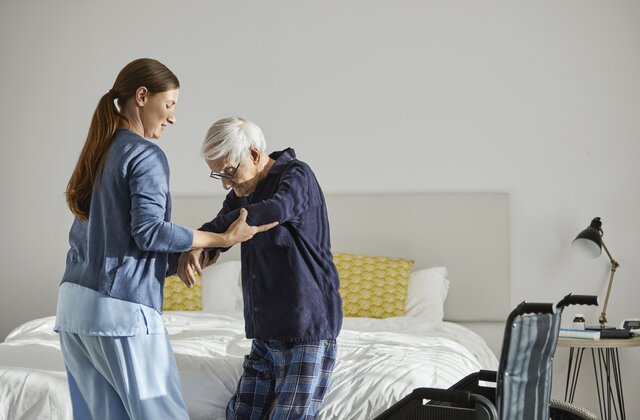

Facing the Loss of Independence in Later Life
When I completed the Meaning of Growing Old introductory activity, I identified losing my independence as the part of aging that scares me the most. Independence has always been extremely important to me. I am used to taking care of my family, making my own decisions, managing a busy household, and being the person other people depend on. Because of this, it is difficult for me to imagine reaching a point where I might need someone else to help me with basic parts of my everyday life. Although I understand that needing assistance does not make someone weak or less valuable, actually putting myself in that situation brings up some very real fears.
The Impact of Losing My Independence
If I experienced a significant loss of independence as an older adult, the physical impact would depend on the reason I needed assistance. I could imagine developing mobility limitations, a chronic illness, cognitive changes, or another condition that affected my ability to complete activities of daily living. I might need assistance bathing, getting dressed, preparing meals, taking medications, driving, or getting around my home. Even if I could still complete some tasks independently, needing help with other personal activities could make me feel as though I had lost control over my own body and daily routine.
Emotionally, this situation would probably be the hardest part for me. My initial feelings would likely include fear, frustration, sadness, anger, and possibly embarrassment. I think I would grieve the version of myself who could do everything without assistance. I might also feel guilty about my children or husband having to help care for me because I would not want them to feel burdened. After spending so much of my life caring for other people, switching roles and becoming the person who needs care would definitely be a major adjustment for me.
I would also have to be careful not to connect my self-worth to what I could physically do. Logically, I know that a person does not lose their value simply because they need assistance. However, knowing that professionally and accepting it personally are two different things. I would have to remind myself that receiving help does not mean I am helpless and that dependence in one area does not remove my right to make decisions about the rest of my life.
Socially, losing independence could make it more difficult to remain connected to other people. If I could no longer drive or leave home without assistance, I might miss family activities, social gatherings, church, community events, or opportunities to travel. I could see myself beginning to decline invitations because I did not want to inconvenience anyone or explain what type of help I needed. Over time, this could lead to loneliness and isolation.
My relationships might also change. My husband or children could become caregivers instead of simply being my family members. Although I believe they would want to help me, caregiving can still create stress and change family roles. I would not want every conversation or interaction to revolve around my medical needs. I would still want to feel like a wife, mother, sister, friend, and individual—not just a patient or someone who needs to be cared for.
Financially, losing independence could be extremely costly. I might have expenses related to medications, medical appointments, therapy, mobility equipment, transportation, home modifications, or in-home assistance. If my needs became more significant, assisted living or long-term care could become necessary. These costs could affect the savings my husband and I had worked to build and could limit what we were able to leave for our children. Financial stress could also reduce my choices regarding where I lived and who provided my care. This is concerning because having fewer financial resources can mean having fewer opportunities to remain independent.
Changes to My Ideal Life as an Older Adult
In my ideal version of later life, I am active, independent, traveling, and spending meaningful time with my family- especially my husband. I imagine finally having the freedom to enjoy the life I worked so hard to build. I want to be involved with my children and grandchildren while also having time for myself. I do not want my age to determine what I can enjoy or how involved I can be in my own life.
Losing my independence would force that vision to change. Traveling might require accessible transportation, mobility equipment, a caregiver, or additional planning. I might not be able to live in the same home if it had stairs or other barriers. Everyday choices, such as when I leave the house, what activities I attend, or how I spend my day, could depend on another person’s availability.
However, not everything about my imagined life would have to disappear. My ability to love my family, give advice, advocate for myself and others, practice my faith, and remain emotionally present could stay the same. I could still participate in family traditions, celebrate important moments, and find meaning in my relationships. My ideal life might look different, but it would not automatically become a life without purpose.
I would have to redefine independence. Instead of viewing independence as doing absolutely everything by myself, I could begin to see it as having control, dignity, and a voice in the decisions affecting me. Using a walker, accepting transportation, receiving help at home, or using assistive technology would not necessarily mean I had given up my independence. Those supports might actually allow me to preserve it.
The CARA Model, Generalized Resistance Resources, and Resilience
The Coping, Appraisal, and Resilience in Aging (CARA) model helps explain how people respond and adapt to challenges throughout the aging process. The model emphasizes that resilience is not simply a personality trait that someone either has or does not have. Instead, resilience develops over time through the interaction between a person’s life experiences, appraisal of a stressful situation, coping strategies, relationships, community resources, and larger sociocultural environment (Aldwin & Igarashi, 2016).
My first appraisal of losing independence would probably be that it was a major threat to my identity and quality of life. That reaction would be understandable, but the CARA model reminds me that my initial appraisal would not have to become my permanent outlook. Over time, I could begin to look at what I was still capable of doing, what could be adapted, and which resources could help me maintain control over my life.
Generalized resistance resources (GRRs) would be especially important in helping me adapt. My individual GRRs would include the coping skills I developed through earlier hardships, my education, health knowledge, problem-solving abilities, faith, determination, and willingness to advocate for myself. My professional background in healthcare and social work would also help me understand systems, ask questions, and locate resources.
My family would be one of my most important interpersonal GRRs. My husband, children, extended family, and friends could provide emotional support, transportation, caregiving assistance, and encouragement. However, healthy communication and clear boundaries would be necessary. I would want my family to support me without taking over every decision or assuming that needing physical help meant I was incapable of speaking for myself.
Community resources could include an accessible healthcare team, a social worker, physical or occupational therapy, transportation services, support groups, senior centers, meal programs, home healthcare, and assistive technology. Home modifications such as grab bars, ramps, improved lighting, or a walk-in shower could also help me remain safely in my own home. At the broader sociocultural level, programs such as Medicare, Medicaid, Social Security, disability protections, and affordable long-term care services could influence whether I had access to the support I needed.
Research supports the importance of these psychological and social resources. Goodarzi et al. (2024) reviewed research concerning the psychosocial factors associated with functional independence among older adults. Their findings showed that depression, social support, and self-efficacy are connected to an older adult’s ability to remain functionally independent. Depression was identified as a particularly strong factor associated with functional dependence. This finding reminds me that losing independence would not be only a physical issue. Supporting my emotional health, confidence, relationships, and sense of control would be just as important as addressing my physical limitations.
Resilience in this situation would not necessarily mean completely recovering or returning to the exact life I had before. It also would not mean pretending that I was not afraid, angry, or grieving. For me, resilience would mean allowing myself to experience those emotions while still finding ways to move forward. It would mean accepting assistance without losing my voice, using available resources, adjusting my environment, and continuing to participate in the relationships and activities that give my life meaning.
Ultimately, this reflection has helped me recognize that my deepest fear is not simply needing physical assistance. My deeper fear is losing control over my life and no longer feeling like myself. The CARA model challenges me to understand that resilience can include adaptation rather than complete recovery. Even if my physical abilities changed, I could still maintain dignity, choice, relationships, purpose, and a meaningful quality of life. As a future social worker, this realization also reinforces how important it is to see older adults as whole people and to support their autonomy rather than making decisions for them simply because they need assistance.
References
Aldwin, C. M., & Igarashi, H. (2016). Coping, optimal aging, and resilience in a sociocultural context. In V. L. Bengtson & R. A. Settersten, Jr. (Eds.), Handbook of theories of aging (3rd ed., pp. 627–655). Springer Publishing Company.
Goodarzi, F., Khoshravesh, S., Ayubi, E., Bashirian, S., & Barati, M. (2024). Psychosocial determinants of functional independence among older adults: A systematic review and meta-analysis. Health Promotion Perspectives, 14(1), 32–43.
I really enjoyed reading your post. I can understand why losing your independence would be one of your biggest fears, especially since you are so used to taking care of your family and being the person others depend on. I also liked how you pointed out that needing help does not mean you are helpless or that you have lost your value. I think that is an important perspective to have as we get older.
I thought your point about independence being more about having control and a voice in your own life was especially meaningful. Sometimes we think being independent means doing everything on our own, but accepting help or using different resources can actually allow someone to remain independent in other ways. I also agree that the emotional side of losing independence could be just as difficult as the physical changes. Having support from family and maintaining those relationships would be really important.
I also liked how you connected this to social work. As future social workers, I think it will be important for us to remember that older adults still want to feel heard, respected, and involved in their own decisions, even when they need assistance.
What do you think would help you the most to adjust emotionally if you ever had to rely on others for everyday tasks?
Hi Stephanie! Great post. I enjoyed your section on the fear of losing independence. That is such an important part of yourself, and especially when you are used to being able to care for your family, it’s scary to think about losing that independence. The resources you mentioned are also great. I think sometimes we assume that an older person will have relatives or someone to care for them. In reality, that is not true in many cases.
In your last section, you mentioned resilience and how that does not mean just getting better or fixing all physical and mental ailments. It means coming to terms with where you are in your life currently. This was a great reflection, and no matter what happens in our futures, we can be resilient through it.
Stephanie,
I stopped after reading the first couple of paragraphs because I had to make this comment. Cruikshank has an entire section at the beginning where she talks about the “myth” of self-reliance. Does anyone really make it totally on their own? Even those of us who are “helpers” have needed help at some point. I wish our culture valued interdependence. And losing your independence doesn’t have to make you less connected to other people. In fact, it often makes you more connected – and not in a dependent fashion, but you get to know people differently and better. Your last paragraph before the CARA model I finally took a breath and said YES!!!
Our view of independence and self-reliance has totally overvalued those skills. When I listen to some of you – and it’s not only you who fears this change – discuss having to rely on other people for more parts of your lives, I wonder how it is that we got to this point. I know all about our Calvinistic beginnings as a country, but we used to value connectedness in a way that naturally created supportive communities. We will talk a lot about that in the Matthews podcast about creating your own village.
I really appreciate you sharing at the end that the true fear is about control. We have built a set of beliefs in our culture that we all have control over things, pretty much based on how hard we work and how much we do. The reality is that we don’t have as much control over things as we like to believe. If we could refocus that belief from control to support, I think we would all benefit. There is more to us as a country and a culture than what we can individually achieve, acquire, and build. We just need to look around a little more, right? I think as we age, that message comes home more clearly – sometimes with a positive result. No matter what challenges we face as we age (and we all will), we can build a support system that surrounds us with a sense of value and worth.
Control and self-reliance are overrated. What will make the difference as we age is support and connection. Just saying – and I am old enough that I’ve earned my opinion.
Dr P